Varicose Veins
Varicose Vein Treatment and Patient Guide
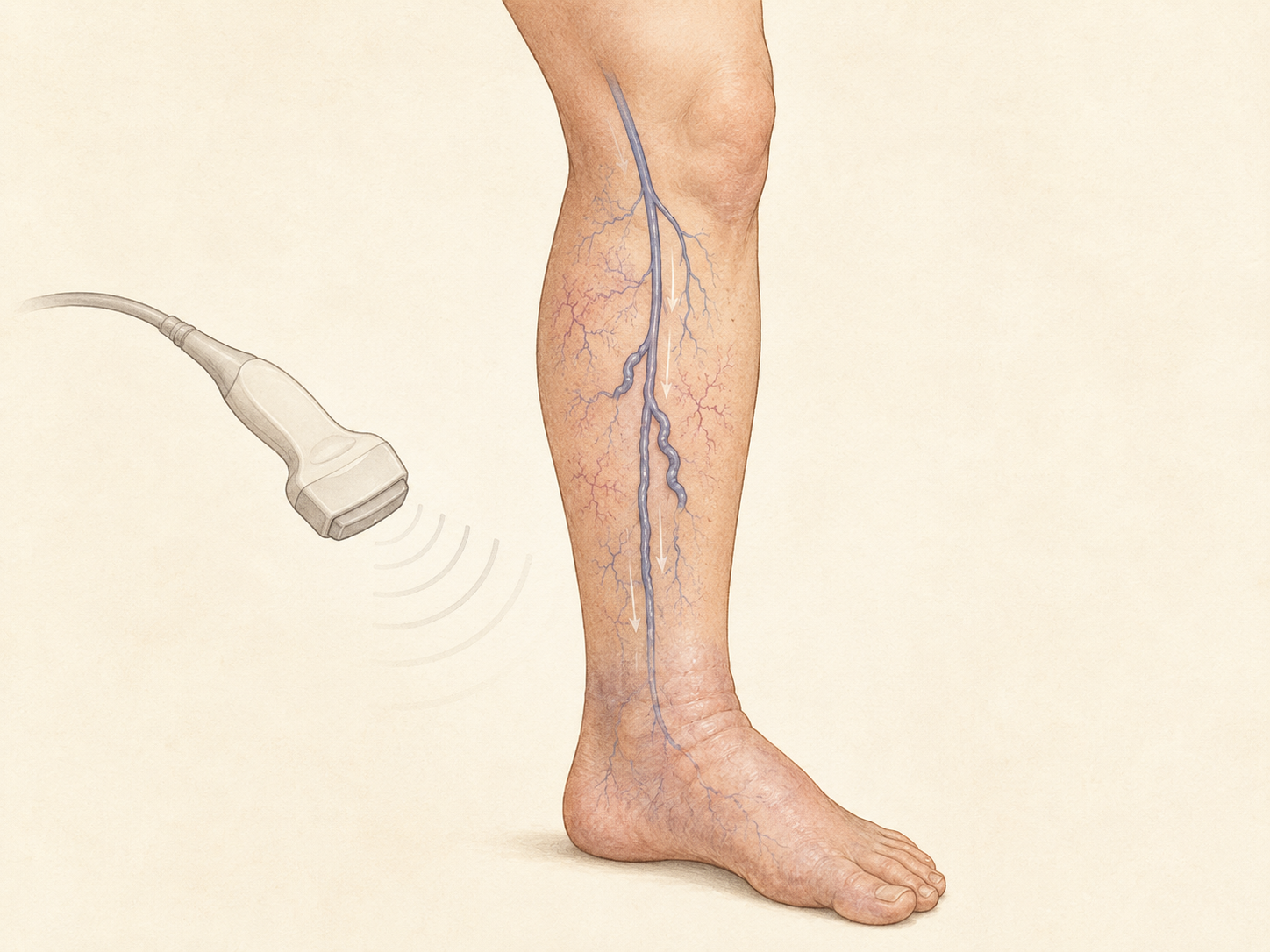
Whether treatment is needed depends on symptoms, skin changes, standing ultrasound findings and individual needs considered together.
Clinical Pathways
Find the information you need
Existing clinical education is organised by the questions patients commonly ask. The medical content and article URLs remain unchanged.
Understanding Varicose Veins
What are varicose veins?
Understand visible veins, valves and venous reflux.
Venous valves and reflux
Learn why blood can flow backwards when venous valves fail.
Who is more likely to develop varicose veins?
Family history, pregnancy, prolonged standing or sitting and weight may contribute.
Will varicose veins go away on their own?
Looking flatter after rest does not mean that venous reflux has resolved.
Symptoms & Stages
Ultrasound Assessment
Treatment
Spider Veins / Tributaries
Spider veins and sclerotherapy
Learn how feeding veins, ultrasound and staged treatment affect results.
Bulging veins: from source to treatment
From symptoms and standing ultrasound to VenaSeal, branch treatment and recovery.
GSV, SSV and branch veins
Understand venous trunks, valve reflux and why tributaries progressively enlarge.
Recovery
Related Clinical Education
REAL PATIENT CASES
Real treatment cases
See how different vein patterns, treatment decisions and recovery pathways are documented through real clinical cases.
View cases →WOMEN’S VASCULAR HEALTH
Women-specific and atypical venous concerns
Pregnancy-related changes, vulvar or perineal veins, and atypical patterns around the groin or inner thigh may call for a broader women’s vascular assessment. These findings do not by themselves establish a pelvic venous disorder.
Explore Women’s Vascular Health →Clinical Perspective
What I want patients to know
- Not every visible vein needs treatment.
- Standing ultrasound identifies the source of reflux.
- Treatment is selected according to anatomy, symptoms, allergy history, recovery needs and cost.