Clinical Education
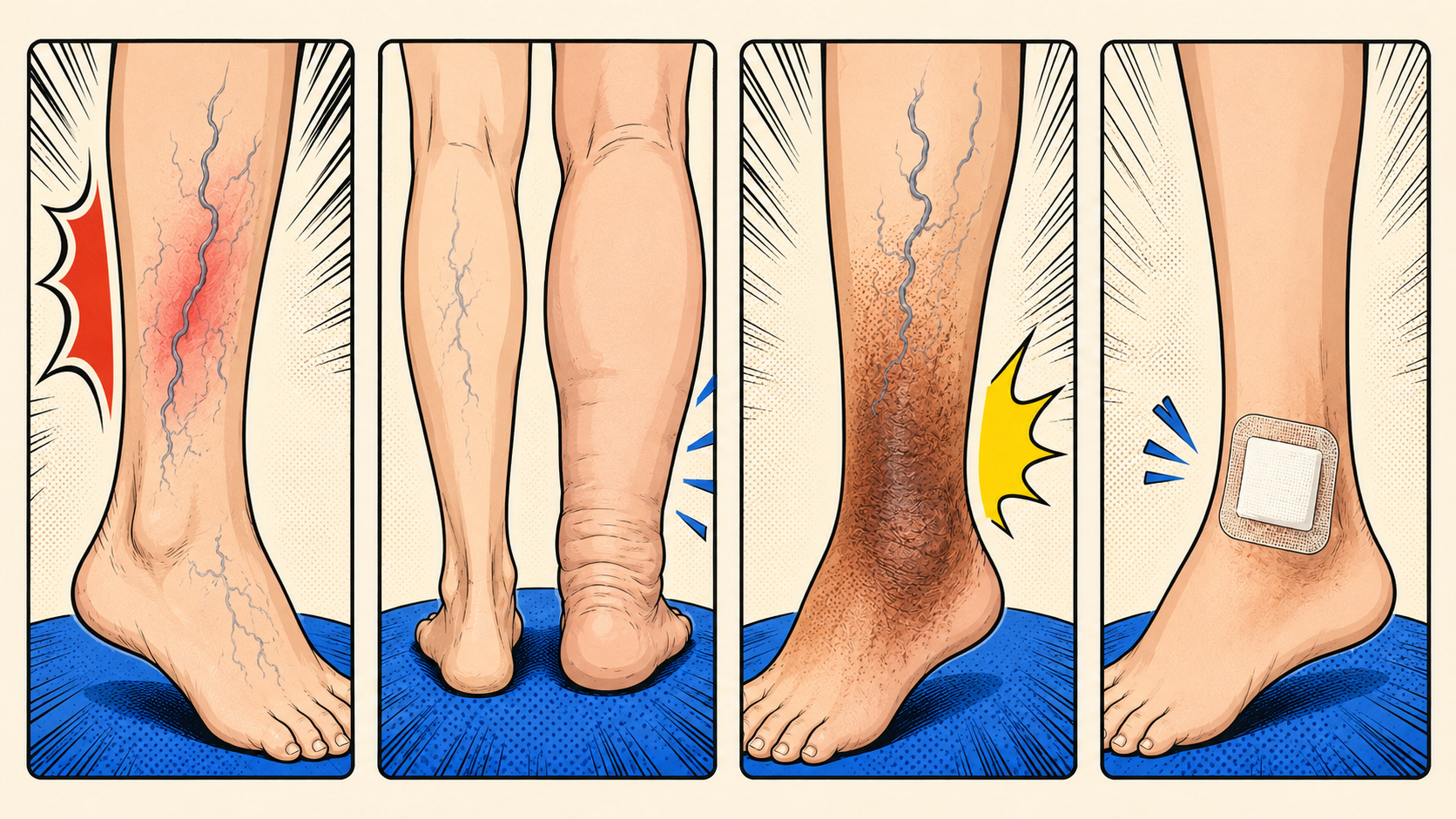
Local redness, warmth, firmness or pain can vary in severity and extent. These findings do not mean that every local inflammatory presentation automatically requires emergency-department care.
- Acute chest or breathing symptoms: emergency care
- Sudden one-sided significant swelling or pain, important bleeding, or worsening local inflammation: prompt assessment
- Progressive skin change, recurrent symptoms or a wound: routine vascular assessment
A | Seek emergency care immediately
- Sudden chest pain, shortness of breath, haemoptysis, syncope or marked respiratory distress requires immediate emergency care.
- These symptoms should not be treated as routine varicose-vein discomfort or left until a scheduled clinic visit.
B | Arrange prompt medical assessment
- Sudden significant swelling or pain in one leg, especially with redness or warmth, needs prompt assessment to exclude an acute vascular problem.
- Significant or persistent bleeding, or local redness, warmth, firmness and pain that is severe, worsening or extending, should not be managed by observation alone.
- Whether local symptoms require an emergency department depends on severity, extent, systemic symptoms and individual risk. Not every presentation of superficial vein inflammation automatically requires emergency care.
What should I do if a varicose vein is bleeding?
- Apply firm, continuous direct pressure with clean gauze or cloth and seek prompt medical care.
- If bleeding is heavy or does not stop, or if you feel faint or unwell, seek emergency help immediately.
- Even when bleeding stops, the bleeding vessel and the wider venous condition still need follow-up assessment.
C | Arrange routine vascular assessment
- Progressive brown discoloration around the ankle or lower leg, eczema or itching, and thickened or firm skin may be associated with chronic venous pressure.
- Recurrent aching, swelling or heaviness, or a wound that is not healing normally, also warrants vascular and wound assessment.
- Symptoms, examination and venous ultrasound when appropriate should be interpreted together; appearance alone cannot identify the cause.
Three levels of urgency
| Urgency | Typical situation | Next step |
|---|---|---|
| Emergency | Chest pain, breathlessness, haemoptysis, syncope or marked respiratory distress | Seek emergency care immediately |
| Prompt assessment | Sudden one-sided significant swelling or pain, important bleeding, or worsening or extending local inflammation | Arrange prompt medical assessment |
| Routine vascular assessment | Progressive skin change, recurrent symptoms or a wound that is not healing normally | Arrange vascular and wound assessment |
Frequently asked questions
Does redness, warmth, firmness or pain around a varicose vein always require emergency care?
No. Urgency depends on severity, extent, progression, systemic symptoms and individual risk. Marked or rapidly changing symptoms still need prompt medical assessment.
What should I do if a varicose vein bleeds?
Apply firm, continuous direct pressure with clean gauze or cloth and seek prompt medical care. Heavy or persistent bleeding, faintness or weakness requires emergency help.
Do ankle discoloration or firm skin require an emergency visit?
Gradual pigmentation, eczema, itching or induration usually warrants routine vascular assessment. Seek earlier care if there is rapid deterioration, infection, significant bleeding or another acute symptom.
Note: Sudden chest pain, shortness of breath, haemoptysis, syncope or marked respiratory distress requires immediate emergency care.
References
- De Maeseneer MG, Kakkos SK, Aherne T, et al. European Society for Vascular Surgery 2022 Clinical Practice Guidelines on the Management of Chronic Venous Disease of the Lower Limbs. European Journal of Vascular and Endovascular Surgery. 2022;63(2):184–267. View source
- Gloviczki P, Lawrence PF, Wasan SM, et al. The 2023 Society for Vascular Surgery, American Venous Forum, and American Vein and Lymphatic Society Clinical Practice Guidelines for the Management of Varicose Veins of the Lower Extremities. Part II. Journal of Vascular Surgery: Venous and Lymphatic Disorders. 2024;12(1):101670. View source
- National Institute for Health and Care Excellence. Varicose veins: diagnosis and management (CG168). Recommendations on referral, bleeding and vascular assessment. View source
This article is for health education only and does not replace individual medical assessment. Seek urgent care for acute symptoms.
Dr LiangVascular
Begin with a careful assessment.
Symptoms, examination and ultrasound findings are considered before treatment options are discussed.
Book an Appointment