Clinical Education
Treatment may involve more than one step. Truncal reflux, tributary varicosities and spider veins may be treated separately to fit recovery and daily life.
- Start with symptoms and ultrasound, not a procedure
- Choose treatment together according to anatomy and daily needs
- Continue follow-up for symptoms and residual tributaries
Treatment pathway
Discuss your concerns
We review aching, swelling, cramps, appearance and skin changes, and clarify what matters most to you.
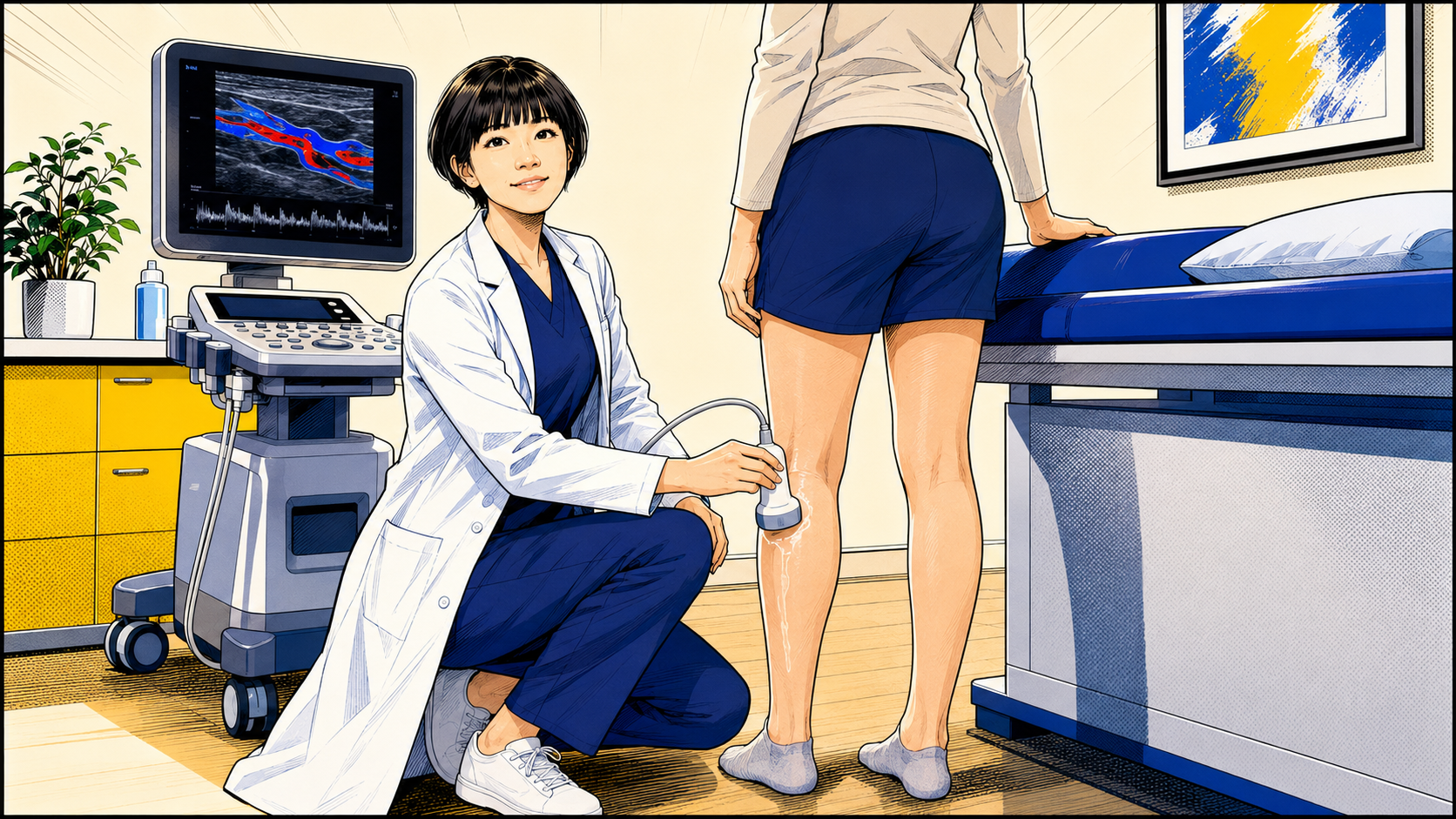
Standing leg-vein ultrasound
We map reflux, vein diameter and course, and check deep-vein patency.
Choose treatment together
Laser, medical adhesive and other options are discussed according to anatomy, allergy history, work, cost and preference.
Treat the refluxing trunk
The main source of reflux is closed using the method suited to your veins.
Assess visible tributaries
Phlebectomy or sclerotherapy may be added at the same time or in stages.
Recovery and compression
Knee-high or thigh-high length, pressure and duration are tailored to the treated segment and procedure. Walking is encouraged while strenuous activity is limited initially.
Follow-up
Recovery, symptoms and any remaining veins are reviewed. Ongoing leg care still matters.
Note: The pathway is not a fixed package. It should be adapted to your ultrasound findings, symptoms and daily needs.
References
- Gloviczki P, et al. SVS/AVF/AVLS Guidelines Part I. J Vasc Surg Venous Lymphat Disord. 2023;11:231–261.e6. View source
- Gloviczki P, et al. SVS/AVF/AVLS Guidelines Part II. J Vasc Surg Venous Lymphat Disord. 2024;12:101670. View source
- De Maeseneer MG, et al. ESVS 2022 Clinical Practice Guidelines. Eur J Vasc Endovasc Surg. 2022;63:184–267. View source
This article is for health education only and does not replace individual medical assessment. Seek urgent care for acute symptoms.
Dr LiangVascular
Begin with a careful assessment.
Symptoms, examination and ultrasound findings are considered before treatment options are discussed.
Book an Appointment