Clinical Education
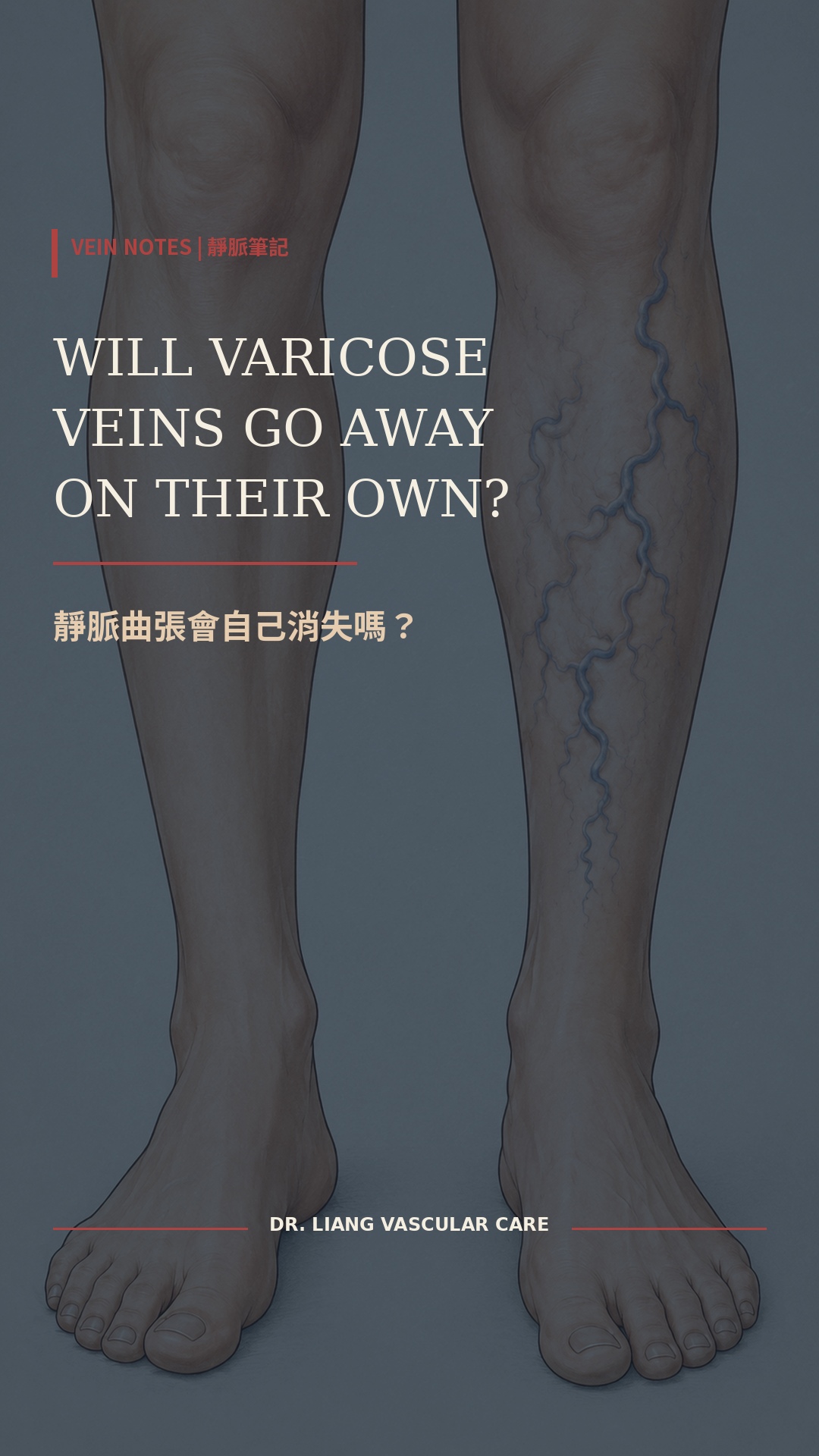
The underlying problem is often valve failure and venous reflux. Appearance alone cannot show severity or determine whether treatment is needed.
Not disappearing on their own does not mean that everyone needs immediate treatment. Observation, assessment and treatment decisions depend on symptoms, skin changes, bleeding or wounds, impact on daily life, and ultrasound findings when the scan is clinically appropriate.
- A flatter vein after rest may only reflect temporarily lower venous pressure
- Not every visible vein needs treatment
- Symptoms, skin changes and ultrasound findings should be considered together
Why can the veins look flatter after rest?
- Lying down or elevating the legs temporarily reduces gravity-related venous pressure.
- The vein may look less prominent, but a damaged valve does not repair itself with rest.
Not disappearing does not mean everyone needs immediate treatment
- Some patients with minimal symptoms and no concerning skin changes may reasonably begin with observation and conservative measures.
- Having no symptoms does not mean that assessment is never appropriate. Clinical review may still help if the diagnosis is uncertain, veins are increasing, skin changes develop or there are other concerns.
- Treatment decisions consider symptoms, visible and skin changes, examination, individual needs and ultrasound findings when a scan is clinically appropriate.
Can exercise, elevation or compression make the veins disappear?
- Regular walking, movement breaks and leg elevation may reduce heaviness or swelling in selected patients.
- Appropriately selected compression may also help some symptoms.
- These measures do not reliably make established varicose veins disappear anatomically and cannot guarantee that the condition will not change.
When should I arrange an assessment?
- Persistent aching, heaviness, swelling or itching, or symptoms that meaningfully affect daily life.
- Pigmentation, eczema, induration, previous bleeding or a wound that is not healing normally.
- Standing duplex ultrasound may be arranged when the history, symptoms and examination suggest venous reflux, or when treatment is being considered.
Which acute symptoms should not wait?
- Sudden significant swelling or pain in one leg, especially with redness or warmth, needs prompt medical assessment.
- Apply direct pressure to significant or persistent bleeding from a varicose vein and seek prompt medical care.
- Sudden chest pain, shortness of breath, haemoptysis, syncope or marked respiratory distress requires immediate emergency care.
Looking flatter does not mean reflux has disappeared
| What to assess | After rest or elevation | What still matters |
|---|---|---|
| Appearance | May look temporarily flatter | Whether the valves work normally |
| Symptoms | Heaviness or swelling may improve | Whether symptoms recur or affect daily life |
| Treatment decision | A photograph is not enough | Examination and duplex ultrasound |
Frequently asked questions
Can varicose veins without symptoms be observed?
Some patients with minimal symptoms and no concerning skin changes may begin with observation and conservative measures. However, having no symptoms does not mean assessment is never appropriate when the diagnosis is uncertain, veins are increasing or other concerns develop.
Can exercise, leg elevation or compression make varicose veins disappear?
These measures may improve heaviness, swelling or discomfort in selected patients, but they do not reliably make established varicose veins disappear anatomically.
Does every person with varicose veins need an ultrasound?
No. Standing duplex ultrasound is considered when the history, symptoms and clinical examination suggest venous reflux, or when treatment planning requires venous mapping.
Note: Seek prompt medical care for sudden one-sided swelling or pain, redness and heat, or active bleeding from a varicose vein.
References
- De Maeseneer MG, Kakkos SK, Aherne T, et al. European Society for Vascular Surgery 2022 Clinical Practice Guidelines on the Management of Chronic Venous Disease of the Lower Limbs. European Journal of Vascular and Endovascular Surgery. 2022;63(2):184–267. View source
- Gloviczki P, Lawrence PF, Wasan SM, et al. The 2023 Society for Vascular Surgery, American Venous Forum, and American Vein and Lymphatic Society Clinical Practice Guidelines for the Management of Varicose Veins of the Lower Extremities. Part II. Journal of Vascular Surgery: Venous and Lymphatic Disorders. 2024;12(1):101670. View source
- NHS. Varicose veins: symptoms, when to seek care and treatment. View source
- NICE. Varicose veins: diagnosis and management (CG168). View source
- University College London Hospitals. Varicose vein surgery: patient information. View source
This article is for health education only and does not replace individual medical assessment. Seek urgent care for acute symptoms.
Dr LiangVascular
Begin with a careful assessment.
Symptoms, examination and ultrasound findings are considered before treatment options are discussed.
Book an Appointment