Clinical Education
The stage does not decide treatment by itself. Symptoms, ultrasound findings and impact on daily life should be considered together.
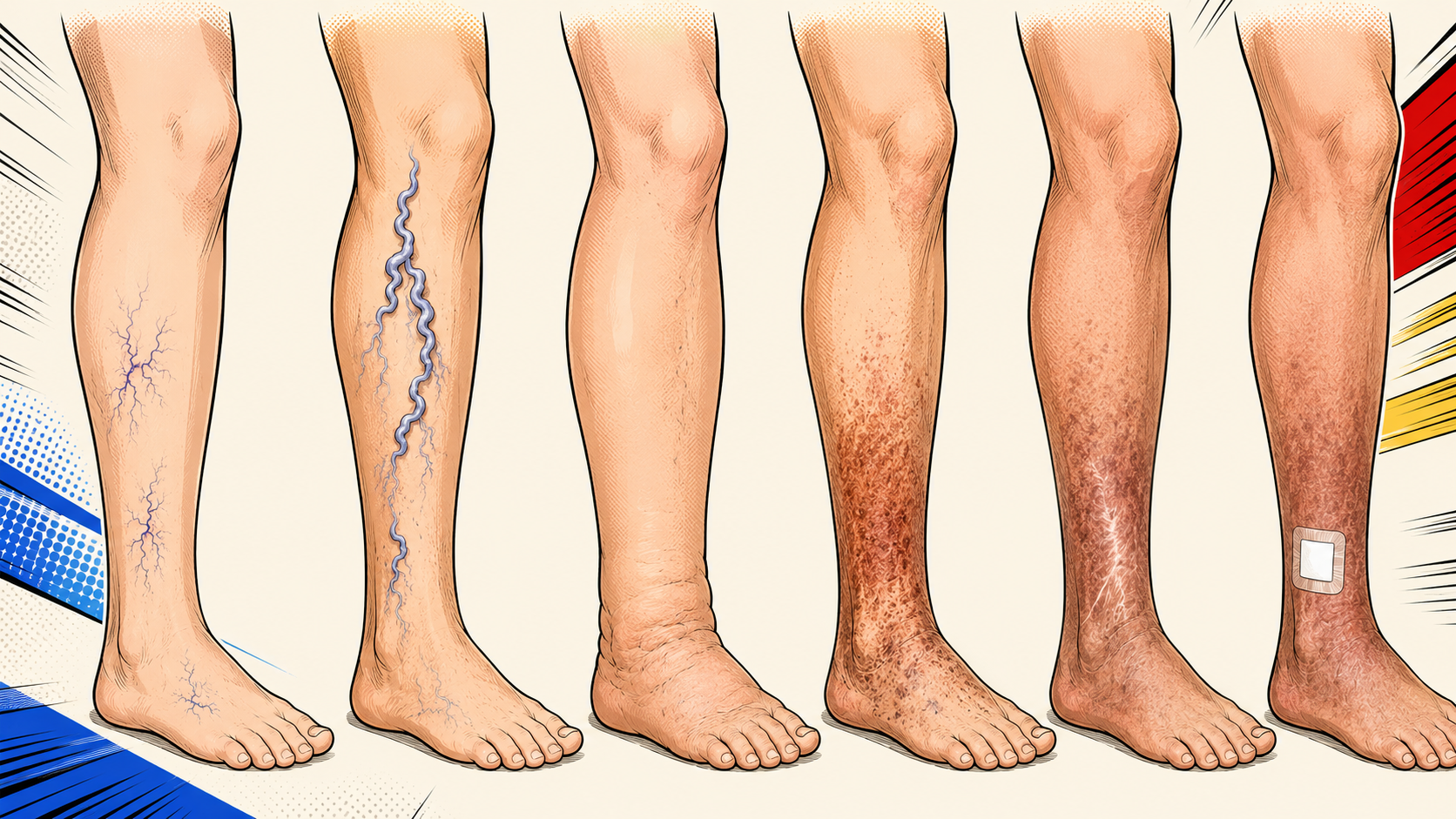
- C1 spider or reticular veins
- C2 varicose veins
- C3 edema
- C4 skin changes
- C5 healed venous ulcer
- C6 active venous ulcer
C1–C2: visible vein changes
- C1: small spider or reticular veins.
- C2: enlarged, twisted, prominent subcutaneous veins.
- Visible appearance and symptom severity do not always match.
C3–C4: swelling and skin changes
- C3: ankle or lower-leg edema, often worse later in the day.
- C4: pigmentation, eczema, induration or skin atrophy.
- Earlier assessment is advisable when skin changes appear.
C5–C6: venous ulcers
- C5: a previous venous ulcer that has healed.
- C6: a current active venous ulcer.
- Wound care and underlying venous hypertension both need attention.
CEAP C1–C6 at a glance
| Stage | Main finding | Suggested step |
|---|---|---|
| C1 | Spider or reticular veins | Discuss appearance and symptoms |
| C2 | Varicose veins | Consider ultrasound |
| C3 | Edema | Assess venous and other causes |
| C4 | Pigmentation, eczema or induration | Seek earlier treatment advice |
| C5 | Healed venous ulcer | Prevent recurrence |
| C6 | Active venous ulcer | Treat the wound and venous disease |
Note: C4 skin changes, a healed C5 ulcer or an active C6 ulcer deserves vascular and wound assessment.
References
- De Maeseneer MG, et al. ESVS 2022 Clinical Practice Guidelines. Eur J Vasc Endovasc Surg. 2022;63:184–267. View source
This article is for health education only and does not replace individual medical assessment. Seek urgent care for acute symptoms.
Dr LiangVascular
Begin with a careful assessment.
Symptoms, examination and ultrasound findings are considered before treatment options are discussed.
Book an Appointment