Clinical Education
Age, family history, pregnancy and genetics cannot be changed. Daily habits cannot guarantee that varicose veins will never appear, but they may improve circulation, reduce leg discomfort and help slow the progression of venous disease.
Avoid staying still for too long
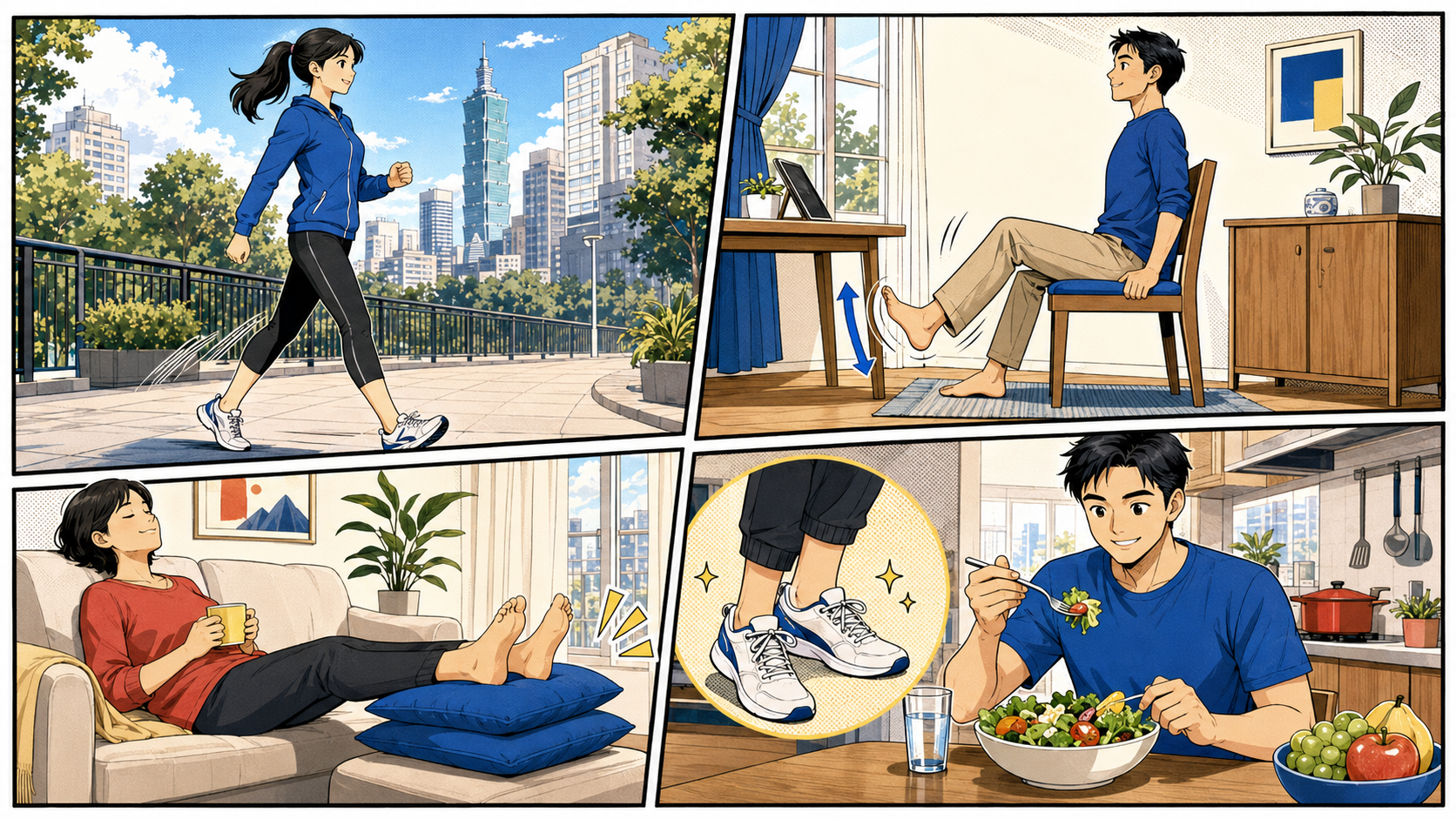
- Long periods of sitting or standing allow blood to collect in the legs. At a desk, walk every 30–60 minutes. If your work requires standing, shift your weight, bend your ankles or perform a few calf raises.
- The main issue is not whether you sit or stand—it is how long you remain completely still.
Walk regularly
- Walking activates the calf-muscle pump and helps move blood back toward the heart. Walking, cycling and swimming are suitable options for many people.
- Regular movement is usually more useful than an occasional strenuous workout.
Maintain a healthy weight
- Excess body weight increases pressure on the leg veins and may make swelling and heaviness more noticeable.
- Weight management does not need to be rapid. Begin with eating and activity habits that you can maintain over time.
Elevate your legs when swollen
- When resting, elevate the legs to about heart level or slightly higher for 15–20 minutes. This may reduce temporary swelling and heaviness.
- Leg elevation can improve comfort, but it cannot repair damaged venous valves.
Choose shoes that allow ankle movement
- Comfortable shoes that allow natural ankle movement help the calf muscles work while walking. High heels do not directly cause varicose veins, but wearing them for long periods may restrict ankle movement.
- If heels are required at work, consider changing into walking shoes during commuting or breaks.
Use compression stockings correctly
- Properly fitted medical compression stockings may reduce aching, swelling and heaviness. The correct length and pressure depend on symptoms, leg measurements, skin condition and arterial circulation.
- Compression can control symptoms, but it does not remove established reflux. Seek advice before your first fitting or before using stronger compression.
Plan ahead for long journeys
- During long flights, train rides or car journeys, move your ankles regularly, walk when it is safe and avoid remaining in one position for several hours.
- If you often develop swelling, have had a blood clot or already have venous disease, ask your doctor whether compression or other preparation is appropriate.
Do not ignore early warning signs
- Persistent swelling, aching, heaviness, itching, bulging veins, ankle discoloration or a wound deserve assessment.
- Standing leg-vein ultrasound can identify reflux and help distinguish venous disease from other causes of leg swelling.
Frequently asked questions
Can exercise prevent varicose veins?
Exercise cannot guarantee prevention, but regular walking and calf movement can support venous return and reduce some symptoms.
Can compression stockings remove varicose veins?
No. They may reduce swelling and discomfort, but they cannot repair damaged valves or eliminate established reflux.
When should leg swelling be checked?
Persistent or one-sided swelling, pain, skin changes or a wound should be assessed. Sudden one-sided swelling with chest pain or breathlessness requires urgent care.
Note: Healthy habits support circulation, but varicose veins are not caused by a lack of effort. If symptoms continue despite lifestyle changes, it does not mean that you have done something wrong. A clinical examination and ultrasound can help determine whether observation, compression or minimally invasive treatment is more appropriate.
References
- De Maeseneer MG, Kakkos SK, Aherne T, et al. European Society for Vascular Surgery (ESVS) 2022 Clinical Practice Guidelines on the Management of Chronic Venous Disease of the Lower Limbs. Eur J Vasc Endovasc Surg. 2022;63(2):184–267. doi:10.1016/j.ejvs.2021.12.024. View source
- Gloviczki P, Lawrence PF, Wasan SM, et al. The 2023 Society for Vascular Surgery, American Venous Forum, and American Vein and Lymphatic Society Clinical Practice Guidelines for the Management of Varicose Veins of the Lower Extremities. Part II. J Vasc Surg Venous Lymphat Disord. 2024;12(1):101670. doi:10.1016/j.jvsv.2023.08.011. View source
- National Heart, Lung, and Blood Institute. Varicose Veins. National Institutes of Health. View source
This article is for health education only and does not replace individual medical assessment. Seek urgent care for acute symptoms.
Dr LiangVascular
Begin with a careful assessment.
Symptoms, examination and ultrasound findings are considered before treatment options are discussed.
Book an Appointment