Clinical Education
Risk does not mean certainty. Regular movement and early attention to symptoms can still help.
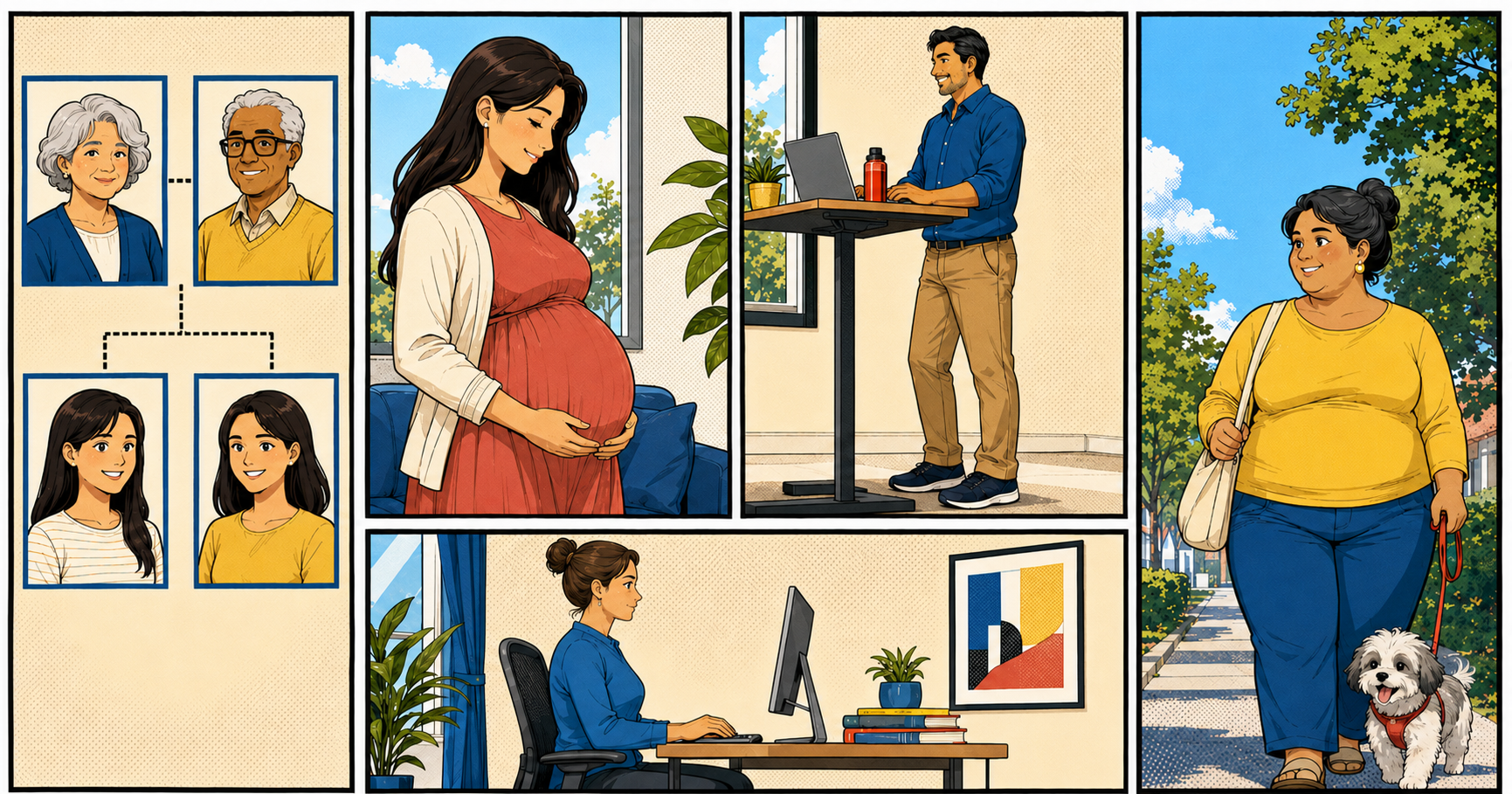
- Family history
- Prolonged standing or sitting
- Pregnancy, increasing age or excess weight
Common risk factors
- Family history can affect valves and vein walls.
- Pregnancy changes hormones and abdominal pressure.
- Prolonged standing or sitting reduces calf-muscle pumping.
- Excess weight increases pressure on leg veins.
What can I do?
- Stand up or move your ankles every 30–60 minutes.
- Walk regularly and work toward a comfortable weight.
- Elevate your legs when resting.
Risk factors and practical steps
| Situation | Possible effect | What may help |
|---|---|---|
| Standing or sitting | Less calf pumping | Move regularly |
| Pregnancy | Hormonal and pressure changes | Elevate the legs |
| Excess weight | More venous pressure | Gradual activity and nutrition changes |
| Family history or age | Cannot be changed | Watch symptoms and assess early |
Note: Prevention may reduce discomfort but cannot guarantee that varicose veins will not occur.
References
- De Maeseneer MG, et al. ESVS 2022 Clinical Practice Guidelines. Eur J Vasc Endovasc Surg. 2022;63:184–267. View source
- Gloviczki P, et al. SVS/AVF/AVLS Guidelines Part II. J Vasc Surg Venous Lymphat Disord. 2024;12:101670. View source
This article is for health education only and does not replace individual medical assessment. Seek urgent care for acute symptoms.
Dr LiangVascular
Begin with a careful assessment.
Symptoms, examination and ultrasound findings are considered before treatment options are discussed.
Book an Appointment