Clinical Education
They are not only a cosmetic concern. Some people also experience heaviness, aching, swelling, itching or night cramps.
- Most often affect the legs
- Symptoms may worsen after prolonged standing
- Visible changes and symptom severity do not always match
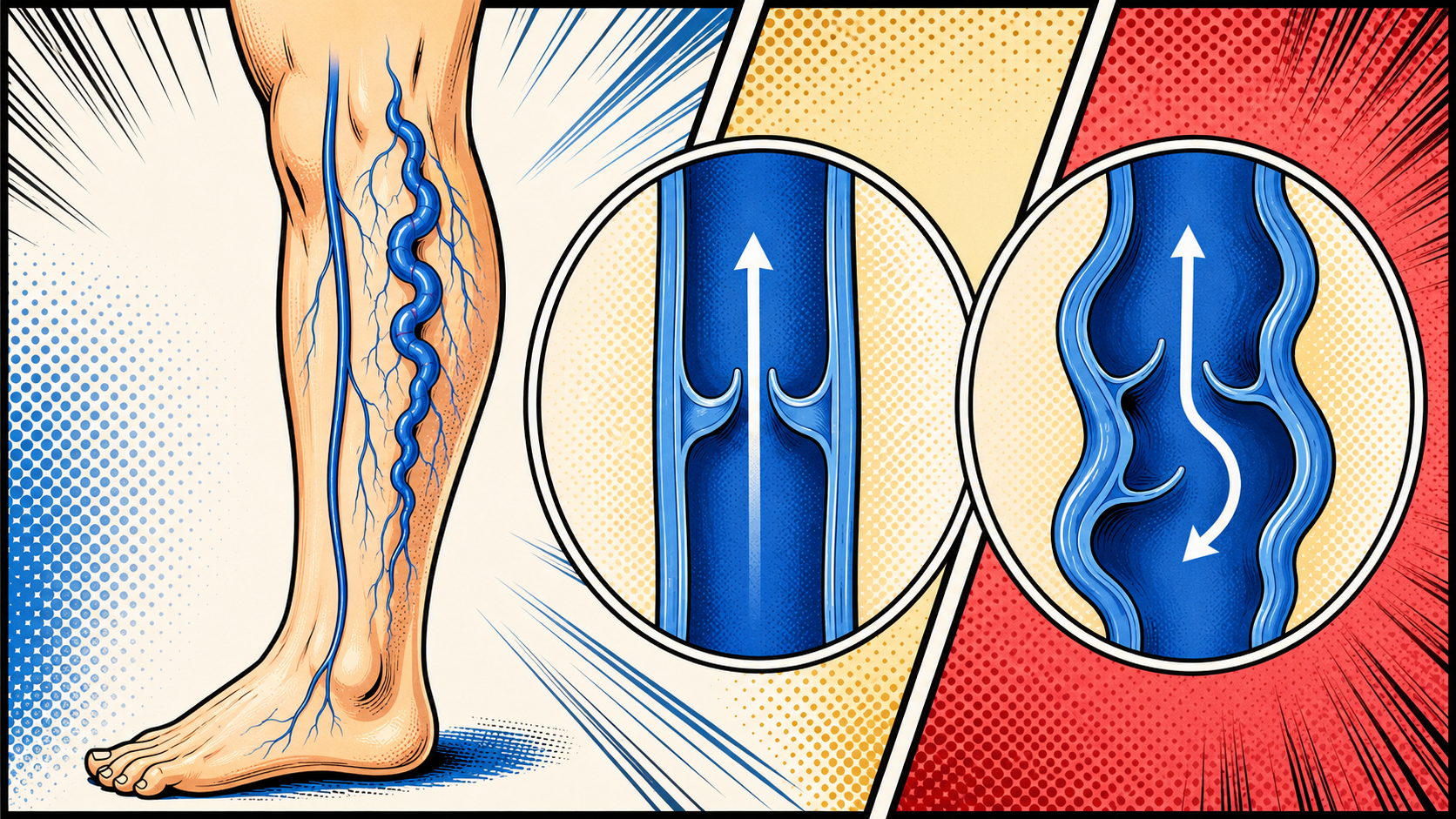
Why do the veins become enlarged and twisted?
- Leg veins carry blood back toward the heart.
- When venous valves do not close properly, blood can flow backward and pool.
- Ongoing pressure gradually stretches and twists the vein.
When should I arrange an assessment?
- Visible veins are increasing or accompanied by heaviness, aching or swelling.
- The ankle skin becomes darker, itchy or firm.
- A wound is slow to heal, or a varicose vein has bled.
Normal veins and varicose veins
| Comparison | Normal vein | Varicose vein |
|---|---|---|
| Blood flow | Moves toward the heart | May flow backward and pool |
| Valves | Close properly | May not close completely |
| Appearance | More even in diameter | Enlarged, twisted or prominent |
| Symptoms | Usually comfortable | May feel heavy, achy, swollen or itchy |
Note: Seek urgent care for sudden one-sided swelling or pain, redness and heat, or active bleeding.
References
- De Maeseneer MG, et al. ESVS 2022 Clinical Practice Guidelines. Eur J Vasc Endovasc Surg. 2022;63:184–267. View source
- Gloviczki P, et al. SVS/AVF/AVLS Guidelines Part II. J Vasc Surg Venous Lymphat Disord. 2024;12:101670. View source
This article is for health education only and does not replace individual medical assessment. Seek urgent care for acute symptoms.
Dr LiangVascular
Begin with a careful assessment.
Symptoms, examination and ultrasound findings are considered before treatment options are discussed.
Book an Appointment