中文版
有風險不代表一定會發生。知道自己的情況,平常多活動、注意症狀,就能更早處理。
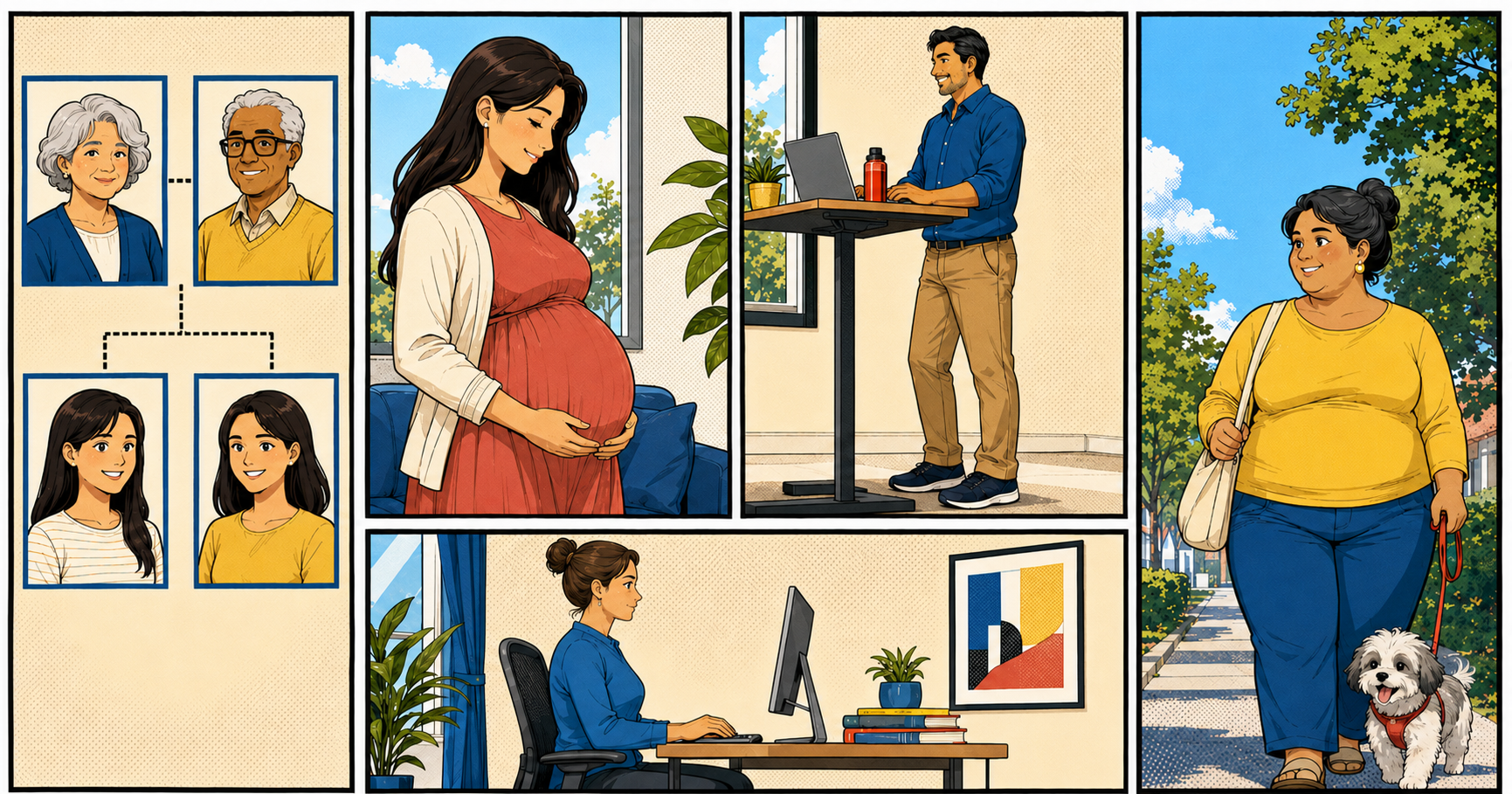
- 家族中有人有靜脈曲張
- 工作需要長時間站著或坐著
- 懷孕、年齡增加或體重過重
常見的風險因素
- 家族史:體質與瓣膜、血管壁特性有關。
- 年齡:血管與瓣膜功能可能隨時間改變。
- 懷孕:荷爾蒙與腹部壓力都會影響腿部靜脈。
- 久站久坐:小腿肌肉活動少,血液較容易滯留。
- 體重過重:增加腿部靜脈承受的壓力。
平常可以做什麼?
- 每隔30–60分鐘起來走動或活動腳踝。
- 維持規律走路與適合自己的體重。
- 休息時把腿稍微抬高。
風險因素與生活對策
| 情況 | 可能的影響 | 生活中可以做的事 |
|---|---|---|
| 久站久坐 | 小腿幫浦活動較少 | 定時走動、活動腳踝 |
| 懷孕 | 荷爾蒙與腹壓改變 | 休息抬腿,有症狀可諮詢 |
| 體重過重 | 腿部靜脈壓力增加 | 循序調整飲食與活動 |
| 家族史/年齡 | 較難改變的體質因素 | 留意症狀,必要時提早檢查 |
提醒:預防可以減少不舒服,但無法保證完全不發生。若腿部症狀越來越明顯,請安排專業評估。
English
Risk does not mean certainty. Regular movement and early attention to symptoms can still help.
- Family history
- Prolonged standing or sitting
- Pregnancy, increasing age or excess weight
Common risk factors
- Family history can affect valves and vein walls.
- Pregnancy changes hormones and abdominal pressure.
- Prolonged standing or sitting reduces calf-muscle pumping.
- Excess weight increases pressure on leg veins.
What can I do?
- Stand up or move your ankles every 30–60 minutes.
- Walk regularly and work toward a comfortable weight.
- Elevate your legs when resting.
Risk factors and practical steps
| Situation | Possible effect | What may help |
|---|---|---|
| Standing or sitting | Less calf pumping | Move regularly |
| Pregnancy | Hormonal and pressure changes | Elevate the legs |
| Excess weight | More venous pressure | Gradual activity and nutrition changes |
| Family history or age | Cannot be changed | Watch symptoms and assess early |
Note: Prevention may reduce discomfort but cannot guarantee that varicose veins will not occur.
References
本文提供一般衛教,不取代個別診斷或治療。若有急性不舒服,請先就近就醫。
Dr LiangVascular
從完整評估開始
先整合症狀、理學檢查與超音波結果,再討論適合的治療選擇。
預約門診