中文版
年齡、遺傳、家族體質及懷孕等因素無法改變。日常習慣也不能保證永遠不會出現靜脈曲張,但可以幫助血液循環、減輕腿部不舒服,也可能延緩靜脈疾病惡化。
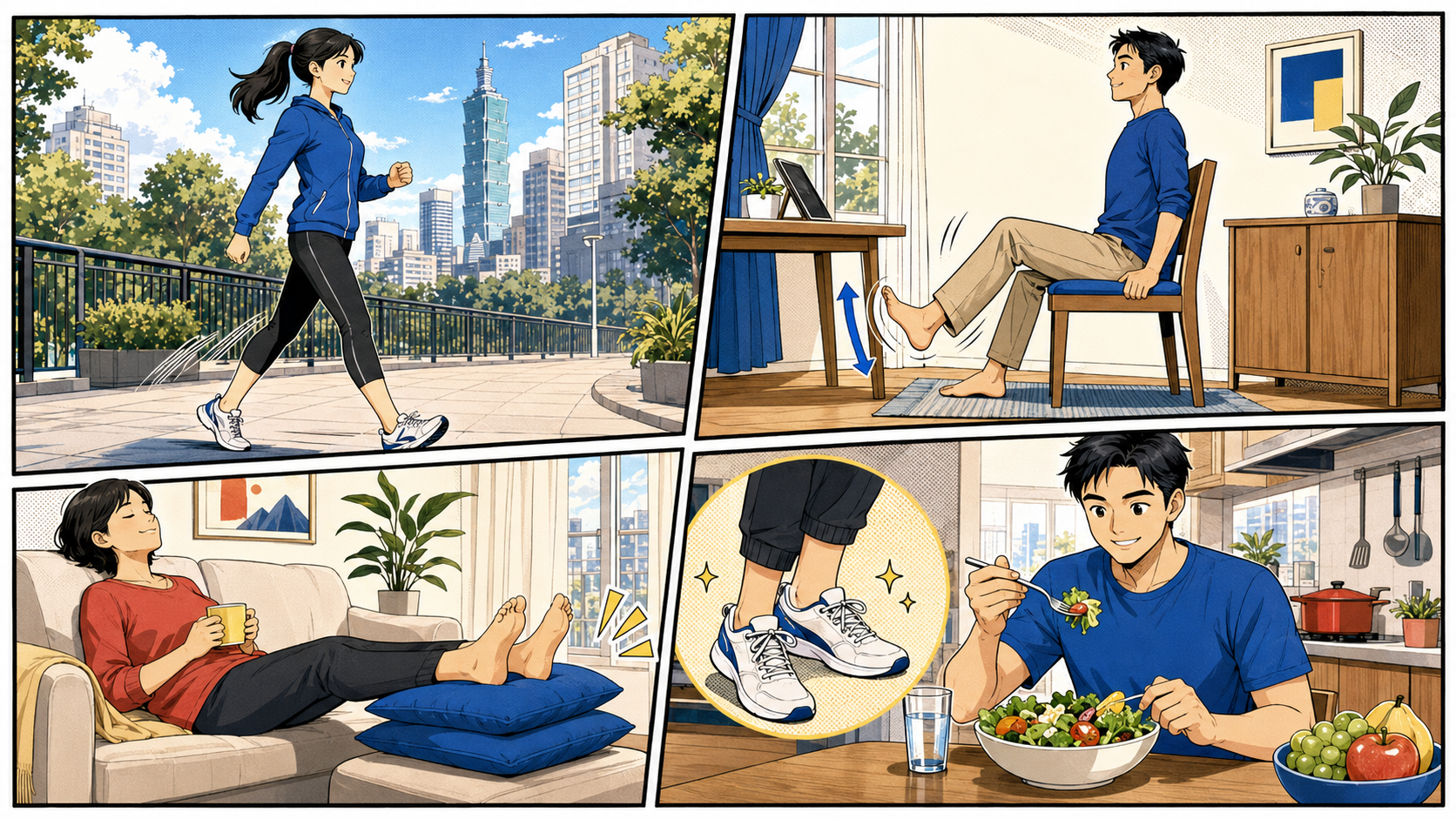
不要維持同一姿勢太久
- 久坐或久站都會讓血液較容易堆積在腿部。坐辦公桌時,可以每30–60分鐘起身走動;需要久站時,則可輪流轉移重心、活動腳踝或做幾次抬腳跟。
- 真正重要的不是站著或坐著哪一種比較不好,而是不要長時間完全不動。
規律走路
- 走路時,小腿肌肉會像幫浦一樣,把腿部血液往心臟方向推。走路、騎腳踏車與游泳都是適合多數人的活動。
- 不需要突然做很激烈的運動;每天規律活動,通常比偶爾一次大量運動更實際。
維持適當體重
- 體重過重會增加腿部靜脈承受的壓力,也可能讓腫脹與沉重感更明顯。
- 體重管理不需要追求快速變化,從能長期維持的飲食與活動習慣開始就很好。
腿腫時適度抬腿
- 休息時,可以把腿抬到接近或稍高於心臟的位置約15–20分鐘,幫助減輕暫時性的腫脹與沉重。
- 抬腿可以讓症狀舒服一些,但無法修復已經受損的靜脈瓣膜。
選擇方便腳踝活動的鞋子
- 舒適、方便腳踝活動的鞋子,有助於走路時使用小腿肌肉。高跟鞋不會直接造成靜脈曲張,但長時間穿著可能限制腳踝活動。
- 如果工作需要穿高跟鞋,可以在休息或通勤時換成較好走的鞋。
正確使用彈性襪
- 合適的醫療彈性襪可以幫助減輕痠、腫與沉重感,但長度與壓力應依症狀、腿部尺寸、皮膚狀況及動脈循環選擇。
- 彈性襪能控制症狀,不能消除已經形成的靜脈逆流。第一次選購或需要較高壓力時,建議先接受評估。
長途旅行前先做好準備
- 搭乘長途飛機、火車或汽車時,可以定時活動腳踝,在安全的情況下起身走動,並避免數小時維持同一姿勢。
- 若平常容易腿腫、曾有血栓或已知有靜脈疾病,旅行前可詢問醫師是否需要彈性襪或其他準備。
不要忽略早期警訊
- 持續的腿腫、痠痛、沉重、搔癢、明顯凸起的血管、腳踝皮膚變色或傷口,都值得安排評估。
- 站立式下肢靜脈超音波可以確認是否有逆流,也能幫助區分其他造成腿腫的原因。
常見問題
運動可以預防靜脈曲張嗎?
運動無法保證完全預防,但規律走路與活動小腿肌肉,可以幫助靜脈回流並減輕部分症狀。
彈性襪可以讓靜脈曲張消失嗎?
不可以。彈性襪可能減輕腫脹與不舒服,但無法修復受損的瓣膜,也不能消除已經形成的逆流。
什麼情況的腿腫需要檢查?
持續或單側腿腫、疼痛、皮膚變色或傷口都應接受評估。若突然單腳腫痛,或合併胸痛、呼吸困難,請立即就醫。
提醒:良好的生活習慣可以幫助腿部循環,但靜脈曲張並不是因為您不夠努力。如果調整生活後仍然不舒服,不代表您做錯了什麼。透過門診檢查與超音波,可以進一步判斷適合觀察、使用彈性襪,或考慮微創治療。
English
Age, family history, pregnancy and genetics cannot be changed. Daily habits cannot guarantee that varicose veins will never appear, but they may improve circulation, reduce leg discomfort and help slow the progression of venous disease.
Avoid staying still for too long
- Long periods of sitting or standing allow blood to collect in the legs. At a desk, walk every 30–60 minutes. If your work requires standing, shift your weight, bend your ankles or perform a few calf raises.
- The main issue is not whether you sit or stand—it is how long you remain completely still.
Walk regularly
- Walking activates the calf-muscle pump and helps move blood back toward the heart. Walking, cycling and swimming are suitable options for many people.
- Regular movement is usually more useful than an occasional strenuous workout.
Maintain a healthy weight
- Excess body weight increases pressure on the leg veins and may make swelling and heaviness more noticeable.
- Weight management does not need to be rapid. Begin with eating and activity habits that you can maintain over time.
Elevate your legs when swollen
- When resting, elevate the legs to about heart level or slightly higher for 15–20 minutes. This may reduce temporary swelling and heaviness.
- Leg elevation can improve comfort, but it cannot repair damaged venous valves.
Choose shoes that allow ankle movement
- Comfortable shoes that allow natural ankle movement help the calf muscles work while walking. High heels do not directly cause varicose veins, but wearing them for long periods may restrict ankle movement.
- If heels are required at work, consider changing into walking shoes during commuting or breaks.
Use compression stockings correctly
- Properly fitted medical compression stockings may reduce aching, swelling and heaviness. The correct length and pressure depend on symptoms, leg measurements, skin condition and arterial circulation.
- Compression can control symptoms, but it does not remove established reflux. Seek advice before your first fitting or before using stronger compression.
Plan ahead for long journeys
- During long flights, train rides or car journeys, move your ankles regularly, walk when it is safe and avoid remaining in one position for several hours.
- If you often develop swelling, have had a blood clot or already have venous disease, ask your doctor whether compression or other preparation is appropriate.
Do not ignore early warning signs
- Persistent swelling, aching, heaviness, itching, bulging veins, ankle discoloration or a wound deserve assessment.
- Standing leg-vein ultrasound can identify reflux and help distinguish venous disease from other causes of leg swelling.
Frequently asked questions
Can exercise prevent varicose veins?
Exercise cannot guarantee prevention, but regular walking and calf movement can support venous return and reduce some symptoms.
Can compression stockings remove varicose veins?
No. They may reduce swelling and discomfort, but they cannot repair damaged valves or eliminate established reflux.
When should leg swelling be checked?
Persistent or one-sided swelling, pain, skin changes or a wound should be assessed. Sudden one-sided swelling with chest pain or breathlessness requires urgent care.
Note: Healthy habits support circulation, but varicose veins are not caused by a lack of effort. If symptoms continue despite lifestyle changes, it does not mean that you have done something wrong. A clinical examination and ultrasound can help determine whether observation, compression or minimally invasive treatment is more appropriate.
References
- De Maeseneer MG, Kakkos SK, Aherne T, et al. European Society for Vascular Surgery (ESVS) 2022 Clinical Practice Guidelines on the Management of Chronic Venous Disease of the Lower Limbs. Eur J Vasc Endovasc Surg. 2022;63(2):184–267. doi:10.1016/j.ejvs.2021.12.024. 查看來源
- Gloviczki P, Lawrence PF, Wasan SM, et al. The 2023 Society for Vascular Surgery, American Venous Forum, and American Vein and Lymphatic Society Clinical Practice Guidelines for the Management of Varicose Veins of the Lower Extremities. Part II. J Vasc Surg Venous Lymphat Disord. 2024;12(1):101670. doi:10.1016/j.jvsv.2023.08.011. 查看來源
- National Heart, Lung, and Blood Institute. Varicose Veins. National Institutes of Health. 查看來源
本文提供一般衛教,不取代個別診斷或治療。若有急性不舒服,請先就近就醫。
Dr LiangVascular
從完整評估開始
先整合症狀、理學檢查與超音波結果,再討論適合的治療選擇。
預約門診