Clinical Education
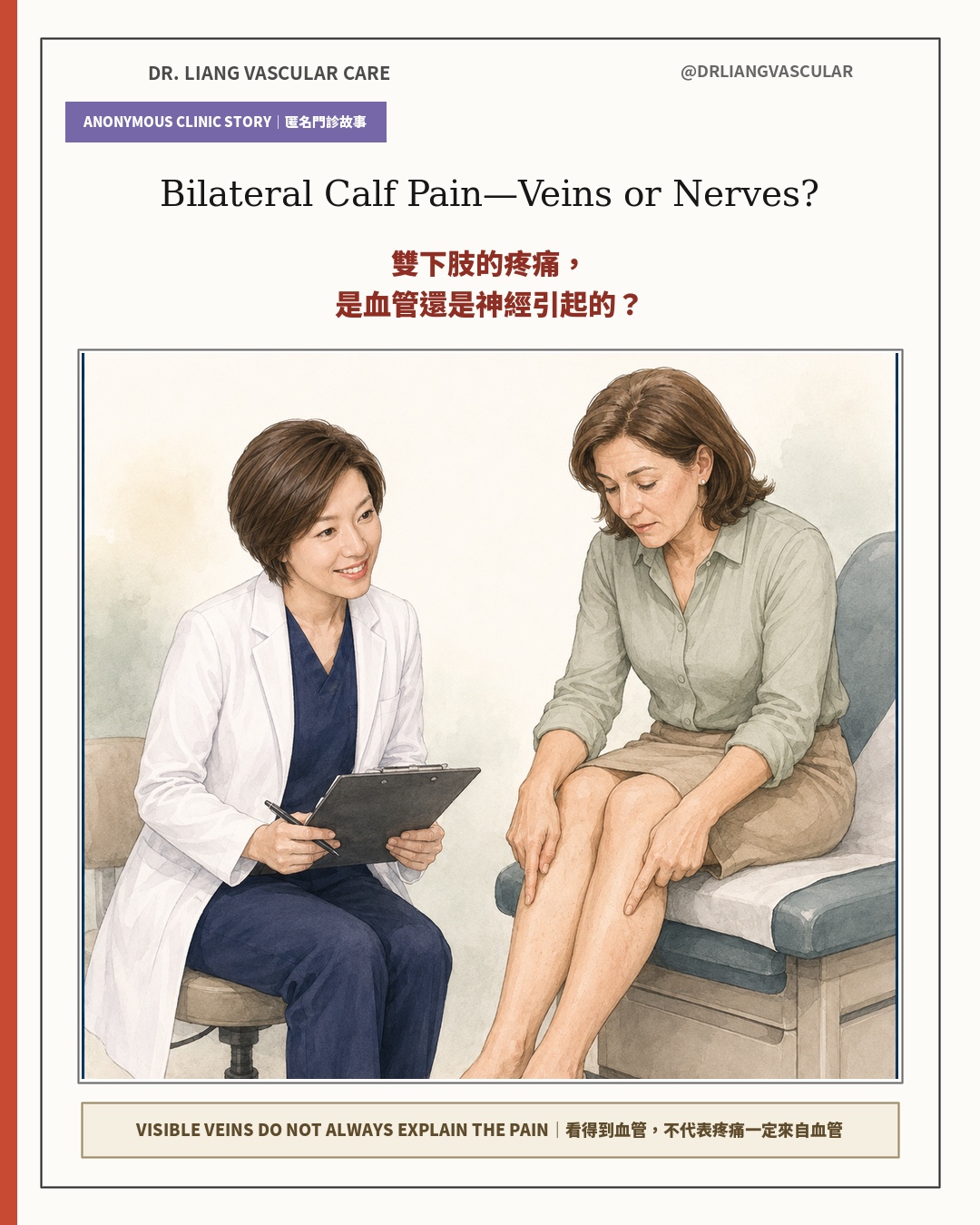
An Israeli woman came to the clinic after several weeks of numbness and pain in both calves and the soles of her feet. A lumbar X-ray obtained at an orthopaedic clinic showed bone spurs, and enlarged veins were also noticed behind her calves. The question was whether the symptoms were more likely venous or neurogenic.
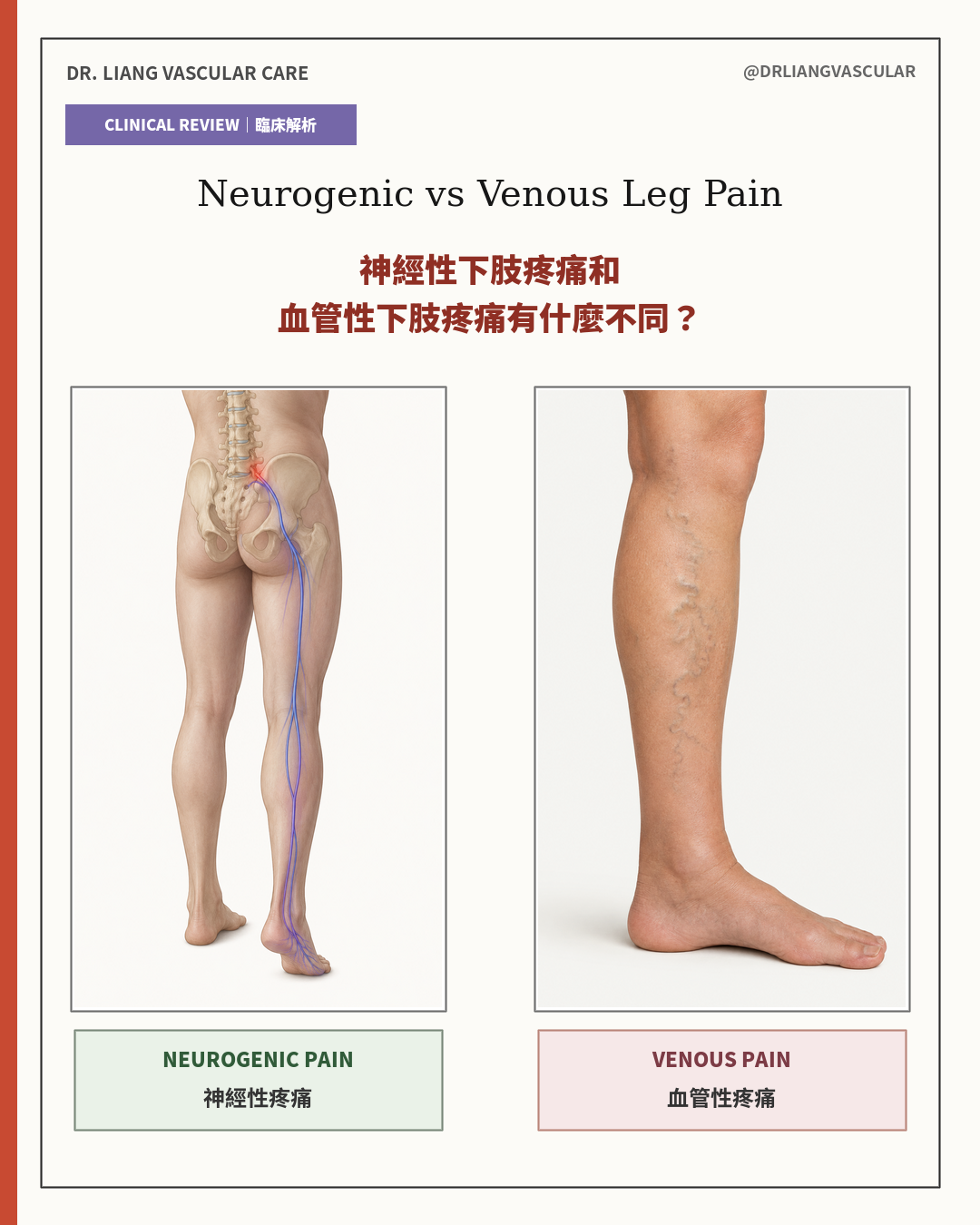
- Visible bulging veins do not prove that varicose veins are the cause of pain
- The quality, timing, triggers and distribution of pain often provide more direction than appearance alone
- Neurogenic and venous symptoms may overlap; diagnosis requires history, examination and appropriate testing
Two findings—but which one explained the pain?
- The vascular assessment confirmed mild-to-moderate varicose veins, but their severity and pattern did not fully explain bilateral numbness and pain.
- The more important clue was that the symptoms were closely related to postural transitions and lumbar movement, with numbness extending into the soles.
- This pattern pointed more toward lumbar or nerve irritation than toward the visible veins alone.
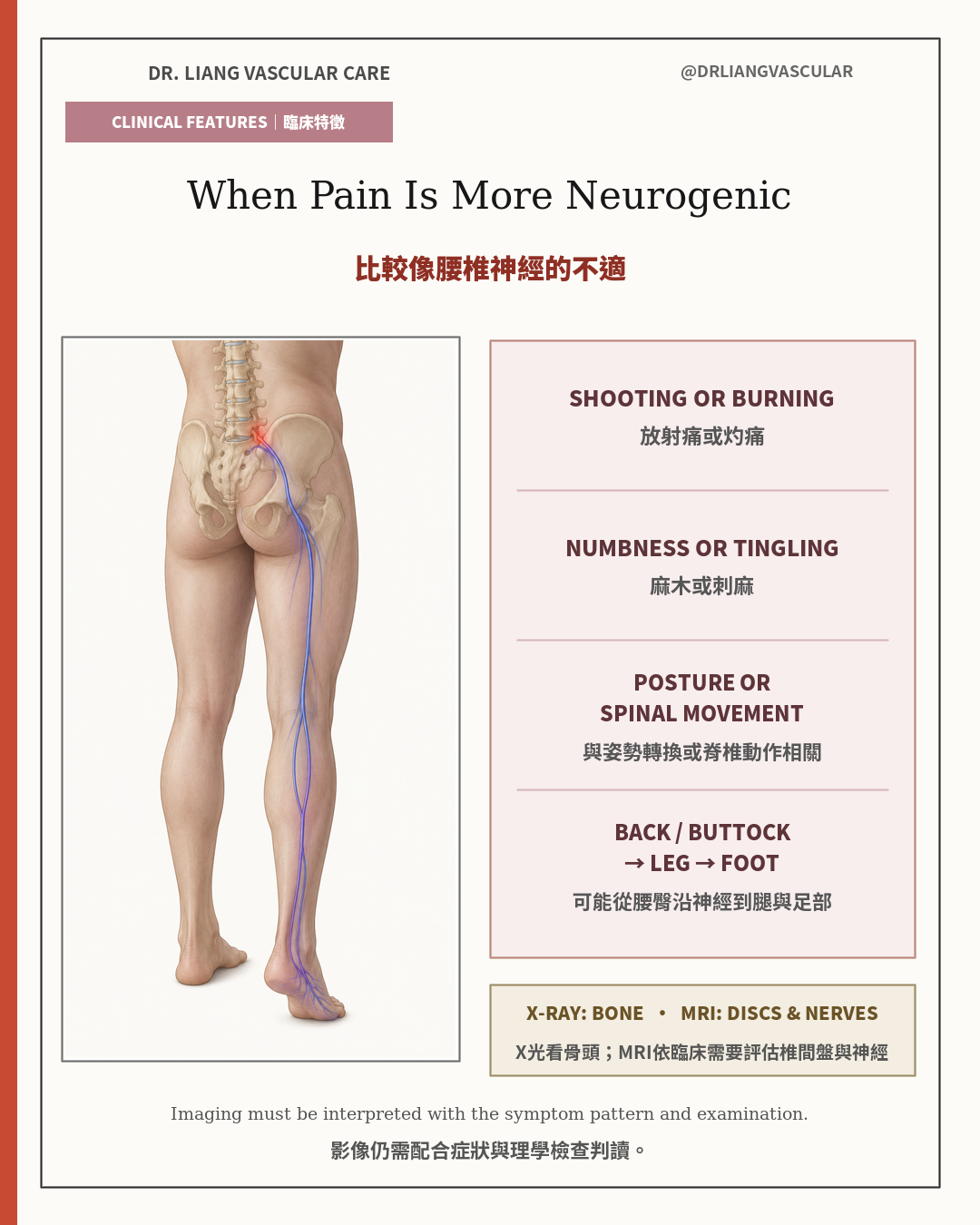
When is pain more neurogenic?
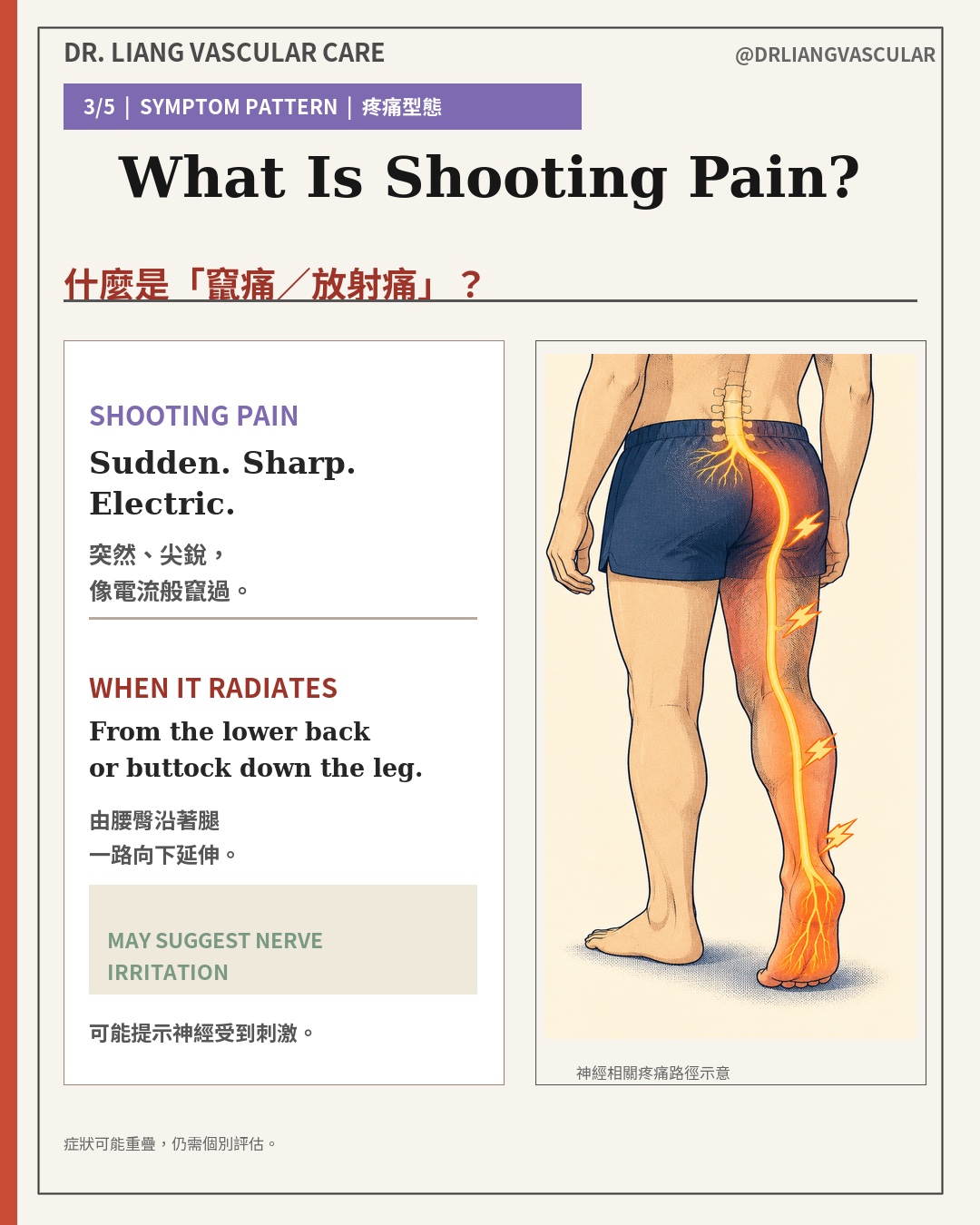
- Pain may feel sudden, sharp, burning or electric, and it may be accompanied by numbness, tingling or sensory change.
- It may radiate from the lower back or buttock down the leg toward the foot and may change with sitting, standing up, bending or other spinal movement.
- X-rays mainly show bony structures. MRI or other nerve testing should be selected by the relevant specialist according to the history, examination and warning signs. Imaging findings still need to match the clinical pattern.
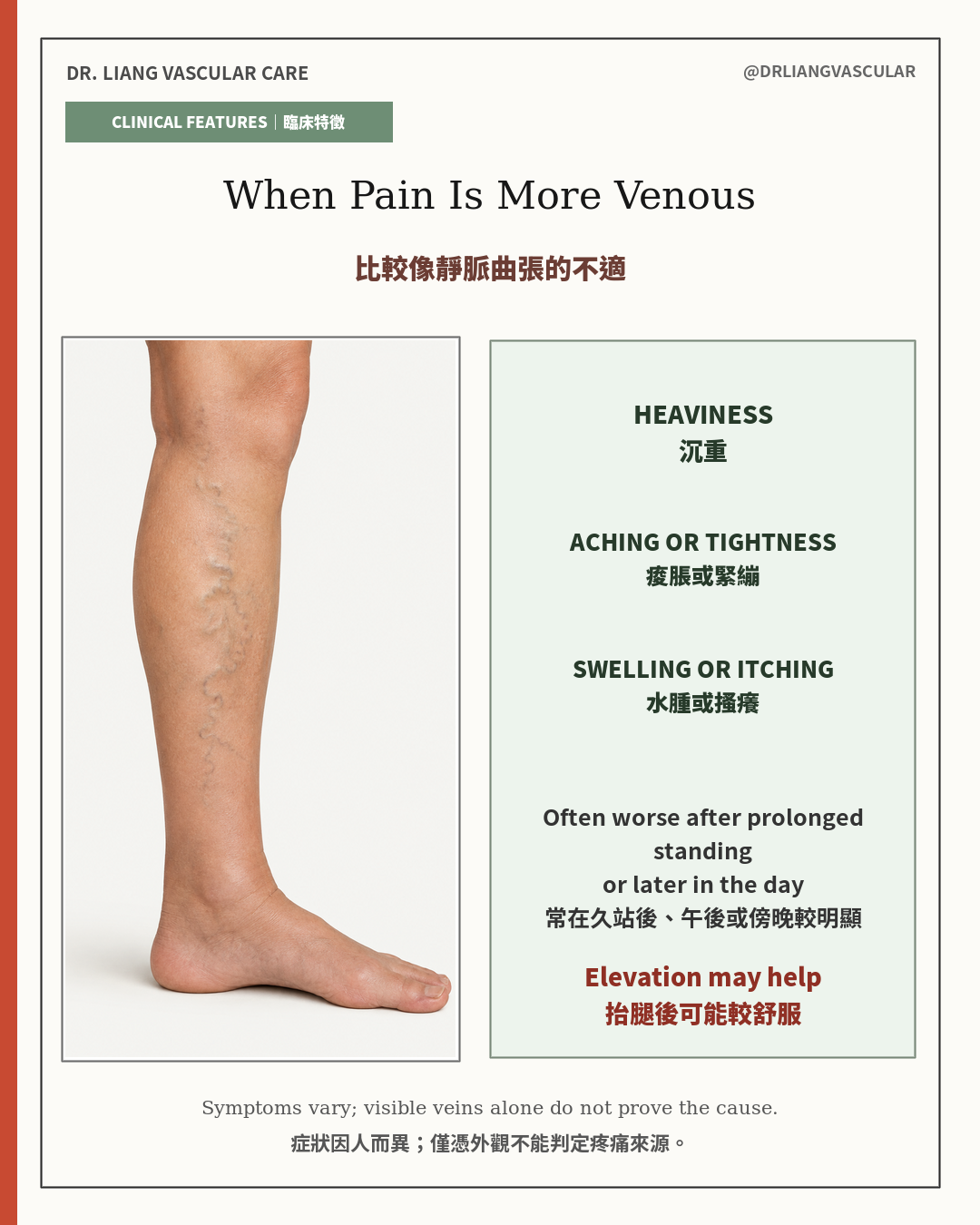
When is pain more venous?
- Venous discomfort more often feels like heaviness, aching, tightness, swelling or itching.
- It commonly becomes worse after prolonged standing or later in the day and may improve after leg elevation.
- Bulging veins, ankle oedema or skin change can support the assessment, but appearance alone does not prove the source of pain.
The turning point: not every vascular visit needs to end with a vein procedure
- After the differences were explained, she understood that her varicose veins were real but might not be the main cause of this episode of numbness and pain.
- She chose further assessment with orthopaedics and rehabilitation medicine for the lumbar spine, discs and nerves, while the veins could be followed according to symptoms.
- Sometimes the most meaningful clinical work is to clarify the likely direction and avoid attributing every symptom to the most visible finding.
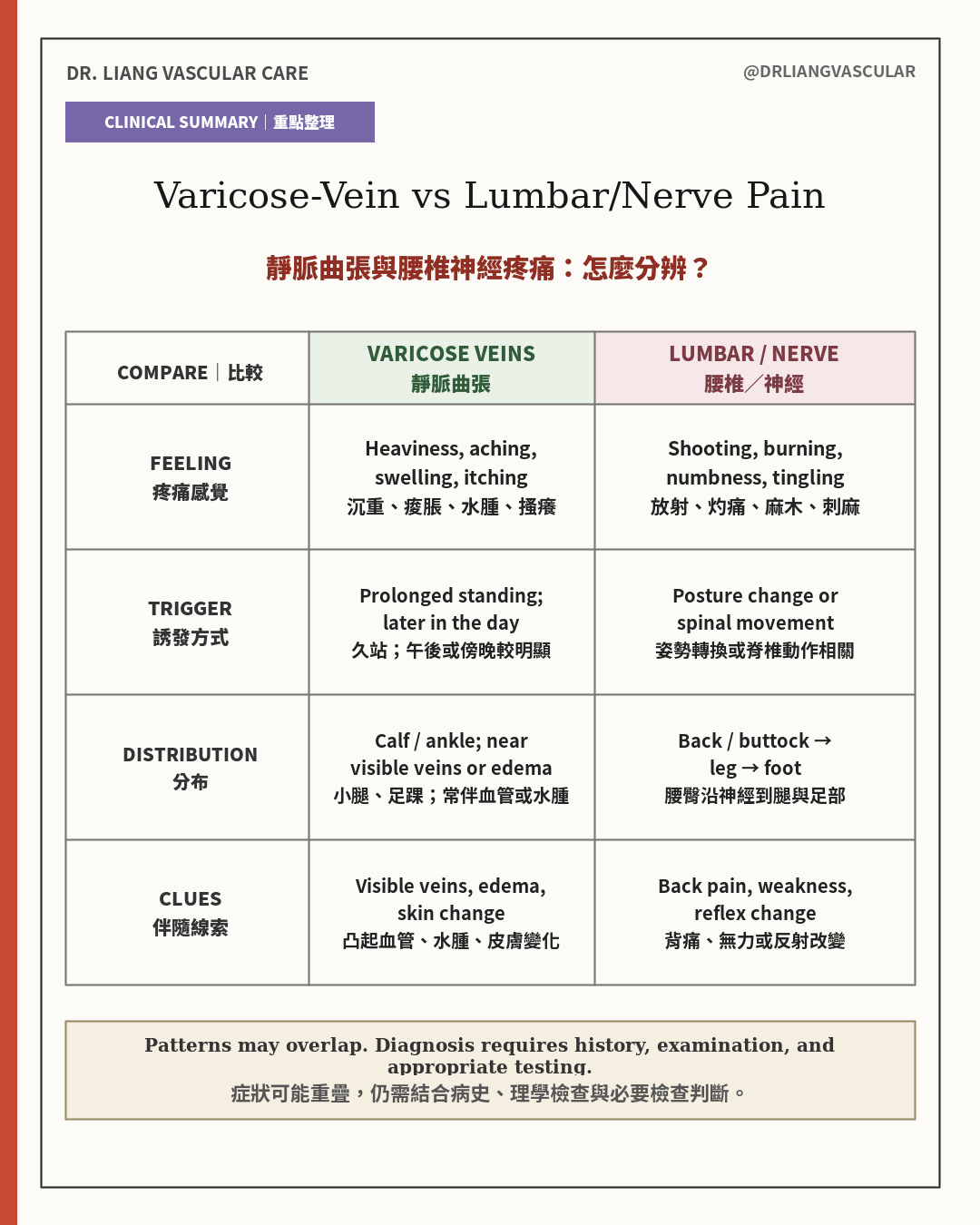
Common differences between neurogenic and venous pain
| Comparison | More typical of varicose veins | More typical of lumbar or nerve pain |
|---|---|---|
| Feeling | Heaviness, aching, swelling, itching | Shooting, burning, numbness, tingling |
| Trigger | Prolonged standing; later in the day | Postural change or spinal movement |
| Distribution | Calf or ankle; often near veins or oedema | Back or buttock toward the leg and foot |
| Associated clues | Bulging veins, oedema, skin change | Back pain, weakness, sensory or reflex change |
Frequently asked questions
If I have bulging veins and leg pain, are the veins always the cause?
No. Varicose veins may cause heaviness, aching, swelling or itching, but muscles, joints, the lumbar spine, peripheral nerves and other conditions can also cause leg pain. The symptom pattern and examination matter.
Does an X-ray showing bone spurs prove that the pain is neurogenic?
No. Degenerative imaging findings are common and may not explain the symptoms. Their significance depends on the clinical history, examination and any further testing that is appropriate.
What is shooting pain?
Shooting pain is often described as sudden, sharp, burning or electric and may travel from the lower back or buttock down the leg. It can suggest nerve irritation, but the description alone is not a diagnosis.
Note: Seek urgent care for new or rapidly worsening leg weakness, bladder or bowel dysfunction, saddle numbness, or sudden one-sided leg swelling accompanied by chest pain or shortness of breath.
References
- Gloviczki P, Lawrence PF, Wasan SM, et al. The 2023 Society for Vascular Surgery, American Venous Forum, and American Vein and Lymphatic Society clinical practice guidelines for the management of varicose veins of the lower extremities. Part II. J Vasc Surg Venous Lymphat Disord. 2024;12(1):101670. doi:10.1016/j.jvsv.2023.08.011. View source
- Apeldoorn AT, Swart NM, Conijn D, Meerhoff GA, Ostelo RWJG. Management of low back pain and lumbosacral radicular syndrome: the Guideline of the Royal Dutch Society for Physical Therapy (KNGF). Eur J Phys Rehabil Med. 2024;60(2):292–318. doi:10.23736/S1973-9087.24.08352-7. View source
- National Institute for Health and Care Excellence. Low back pain and sciatica in over 16s: Quality statement 2—Referrals for imaging. QS155. Published July 27, 2017. View source
- Montaner-Cuello A, et al. Comparison of Magnetic Resonance Imaging with Electrodiagnosis in the Evaluation of Clinical Suspicion of Lumbosacral Radiculopathy. Diagnostics (Basel). 2024;14(12):1258. doi:10.3390/diagnostics14121258. View source
This is an anonymized clinic story. Some identifying details have been adjusted to protect patient privacy. The article and illustrations provide general health education and are not a basis for self-diagnosis. Neurogenic and venous symptoms may overlap; diagnosis requires an individual history, physical examination and appropriate testing.
Dr LiangVascular
Begin with a careful assessment.
Symptoms, examination and ultrasound findings are considered before treatment options are discussed.
Book an Appointment