中文版
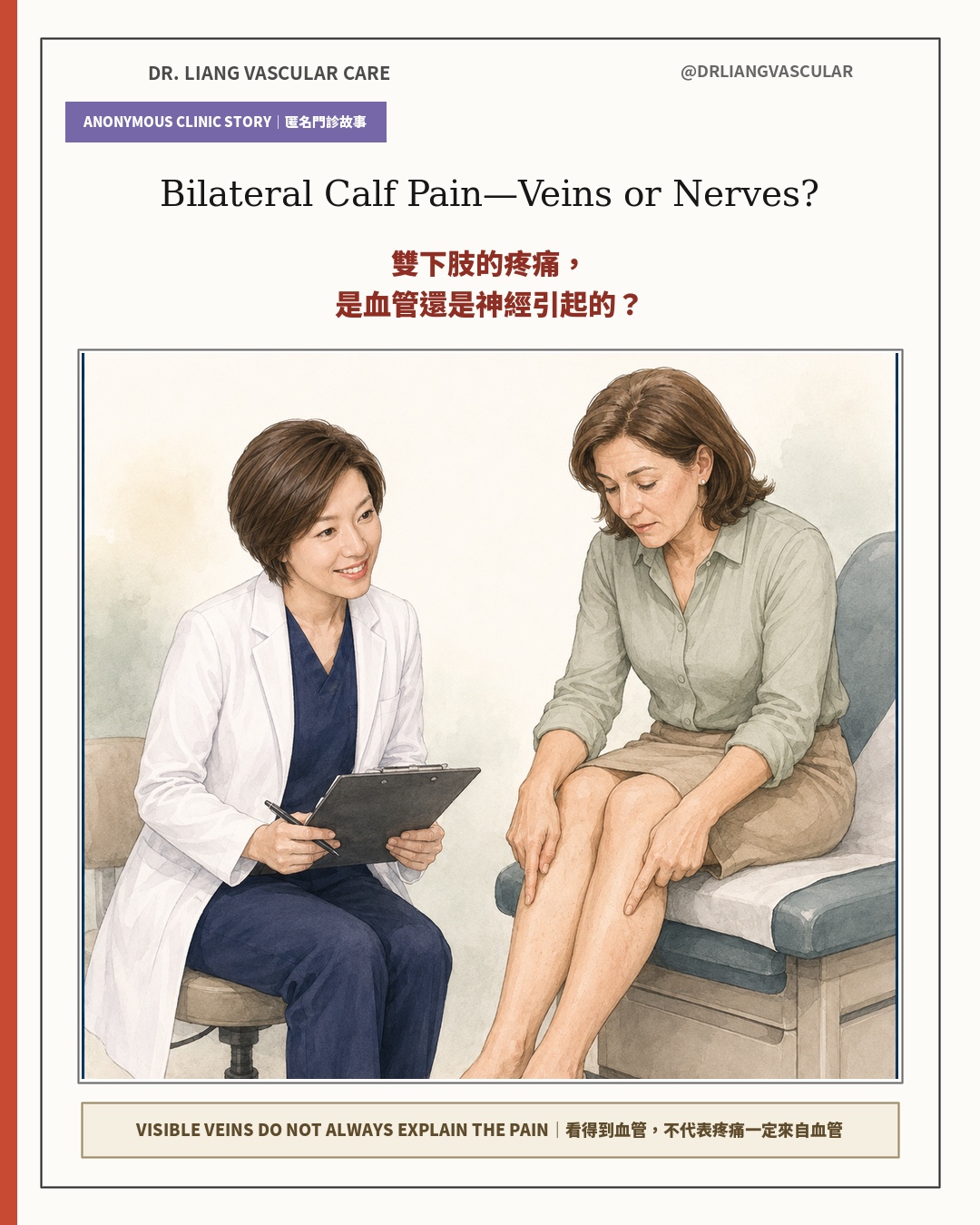
一位來自以色列的女性,因為雙側小腿與腳底持續麻痛數週而來到門診。她先在骨科接受評估,腰椎X光發現骨刺;醫師也注意到她小腿後方的血管較為膨大,因此建議進一步確認:疼痛究竟比較像血管問題,還是可能來自神經?
- 看得到凸起血管,不等於疼痛一定由靜脈曲張造成
- 疼痛的感覺、出現時機、誘發姿勢與分布,往往比外觀更能提供方向
- 神經性與靜脈性症狀可能重疊,仍需結合病史、理學檢查與必要檢查判斷
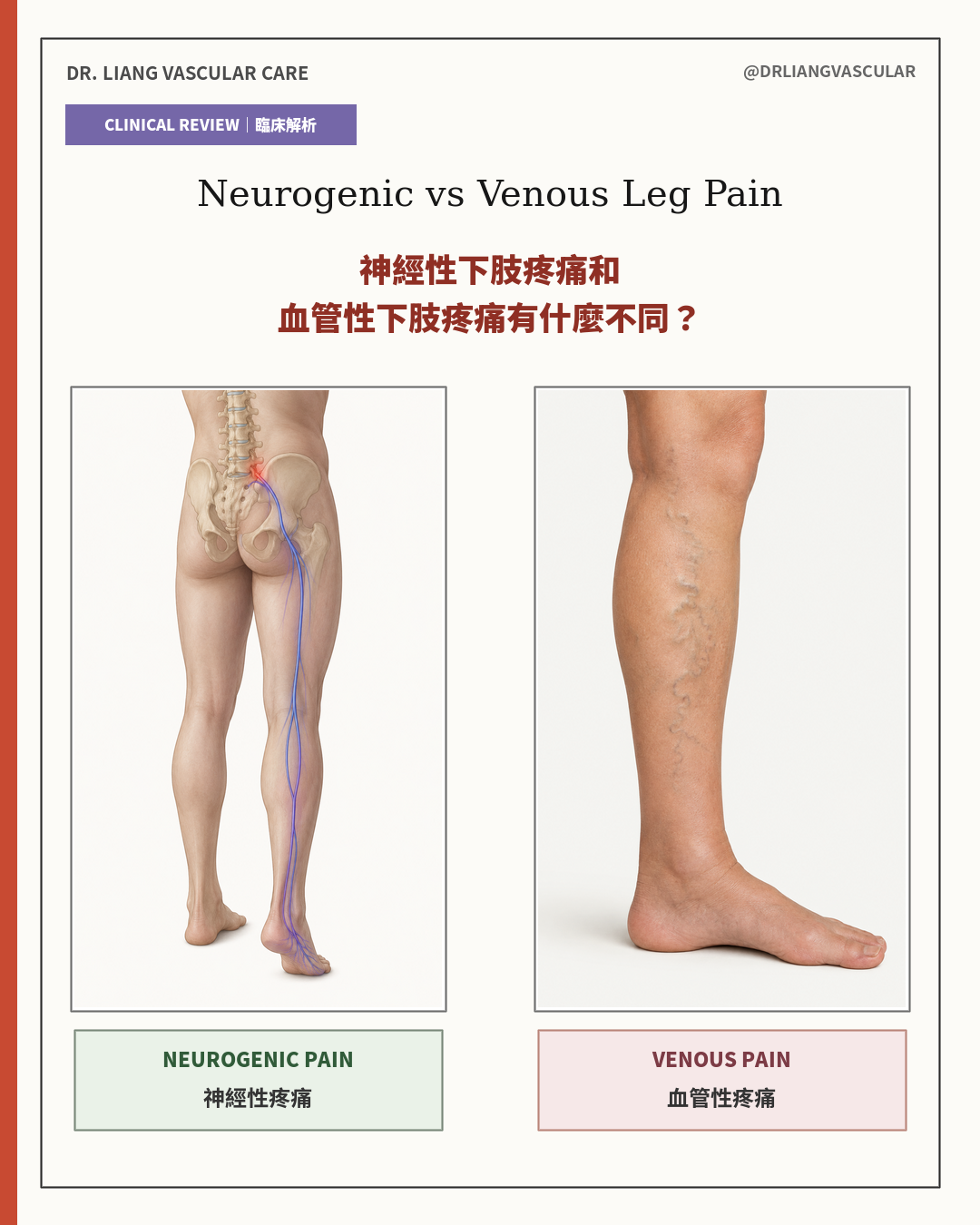
兩個檢查發現,哪一個真正解釋疼痛?
- 血管評估確實發現輕度至中度靜脈曲張,但程度與症狀表現並不足以完整解釋她的雙側麻痛。
- 真正重要的線索,是她的疼痛與姿勢轉換及腰椎活動密切相關,並伴隨小腿與腳底麻木。
- 因此,這次的不適型態比較偏向腰椎或神經受到刺激,而不是單靠看得到的靜脈曲張就能說明。
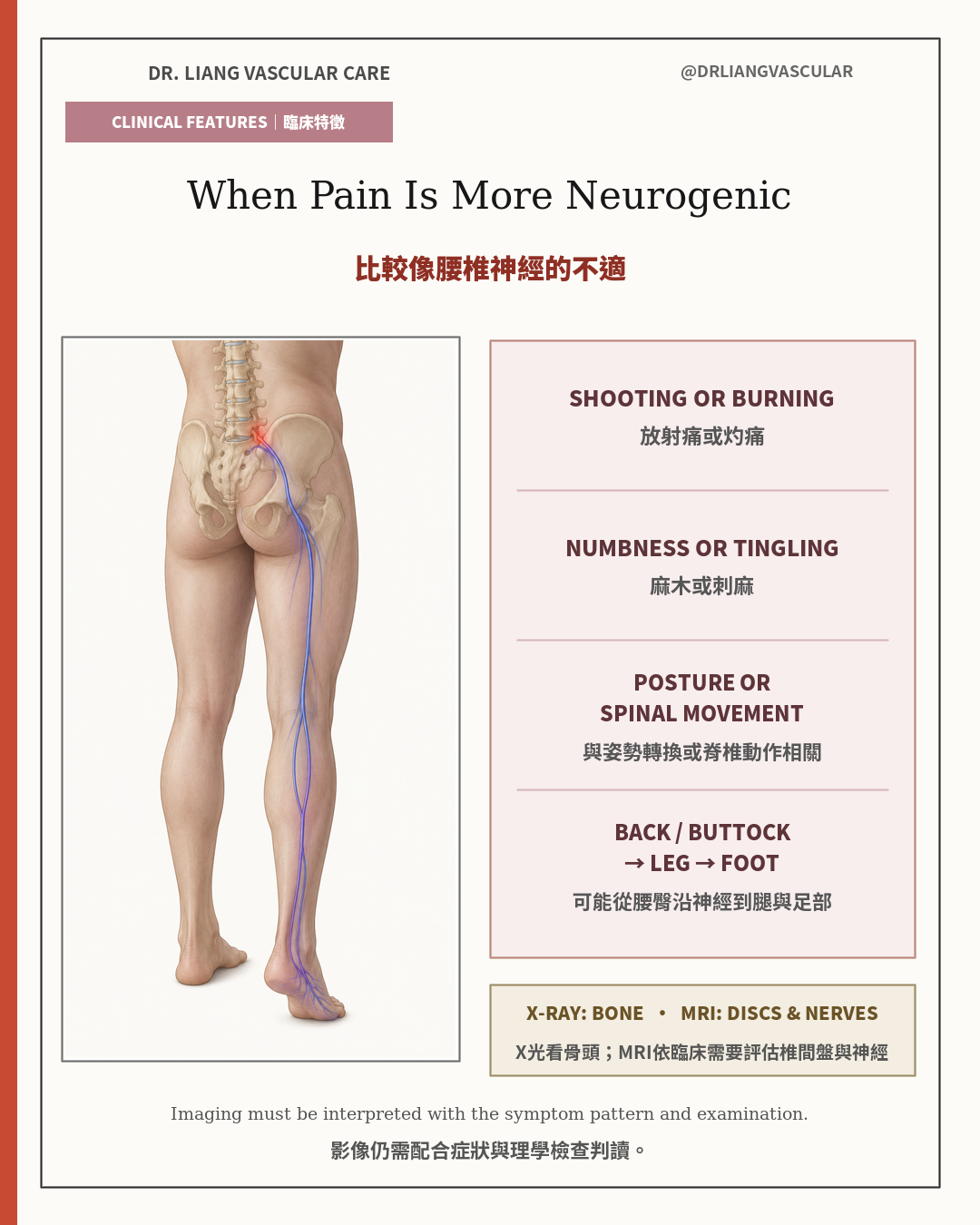
什麼情況比較像神經性疼痛?
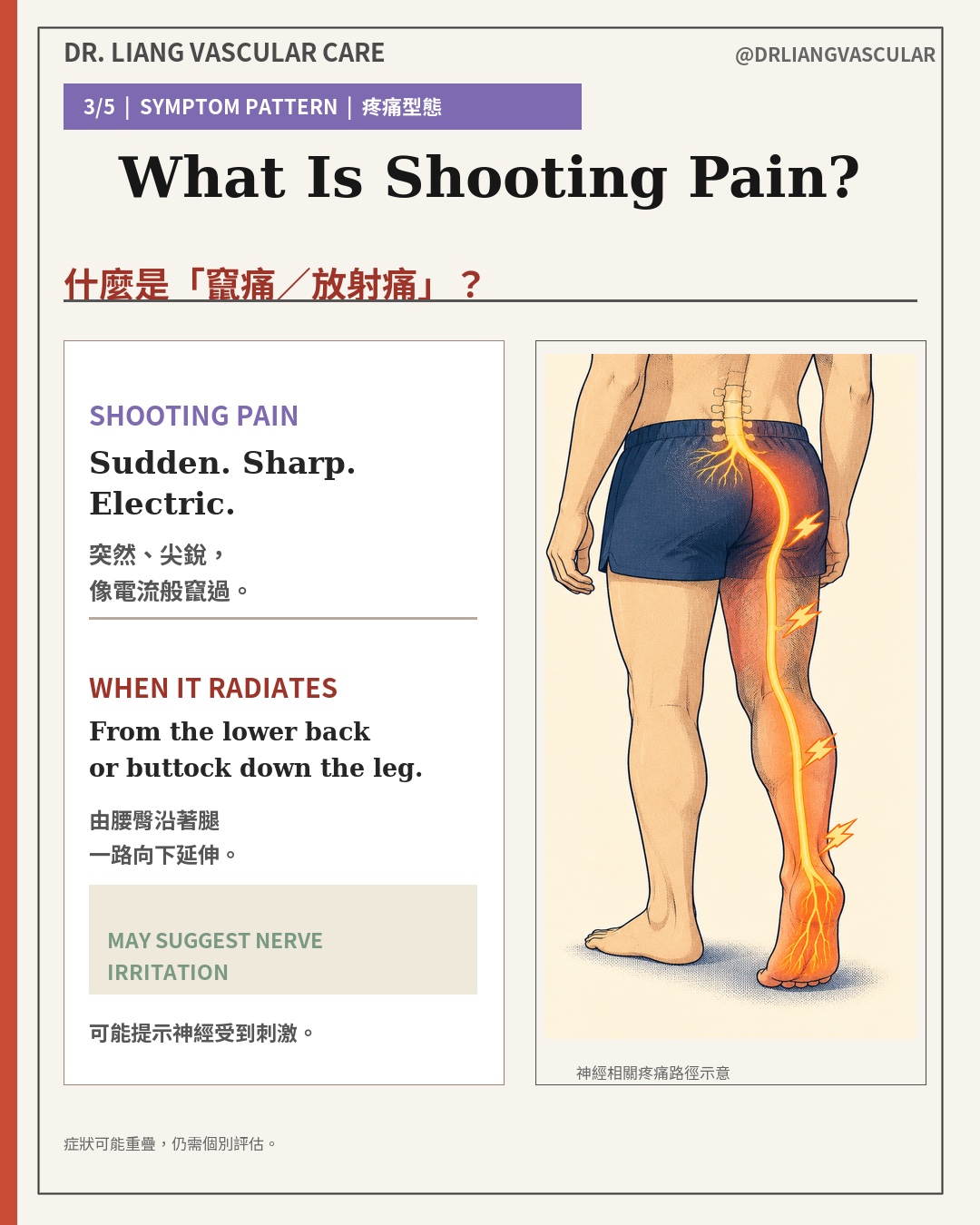
- 疼痛可能突然、尖銳、灼熱或像電流般竄過,也常伴隨麻木、刺麻或感覺改變。
- 不舒服可能從腰部或臀部沿著腿一路向下延伸到腳底,並與坐下、起身、彎腰或其他姿勢變化相關。
- X光主要呈現骨性結構;是否需要MRI或其他神經檢查,應由相關專科依症狀、理學檢查與是否有警訊個別決定。影像發現也必須和症狀相互對照。
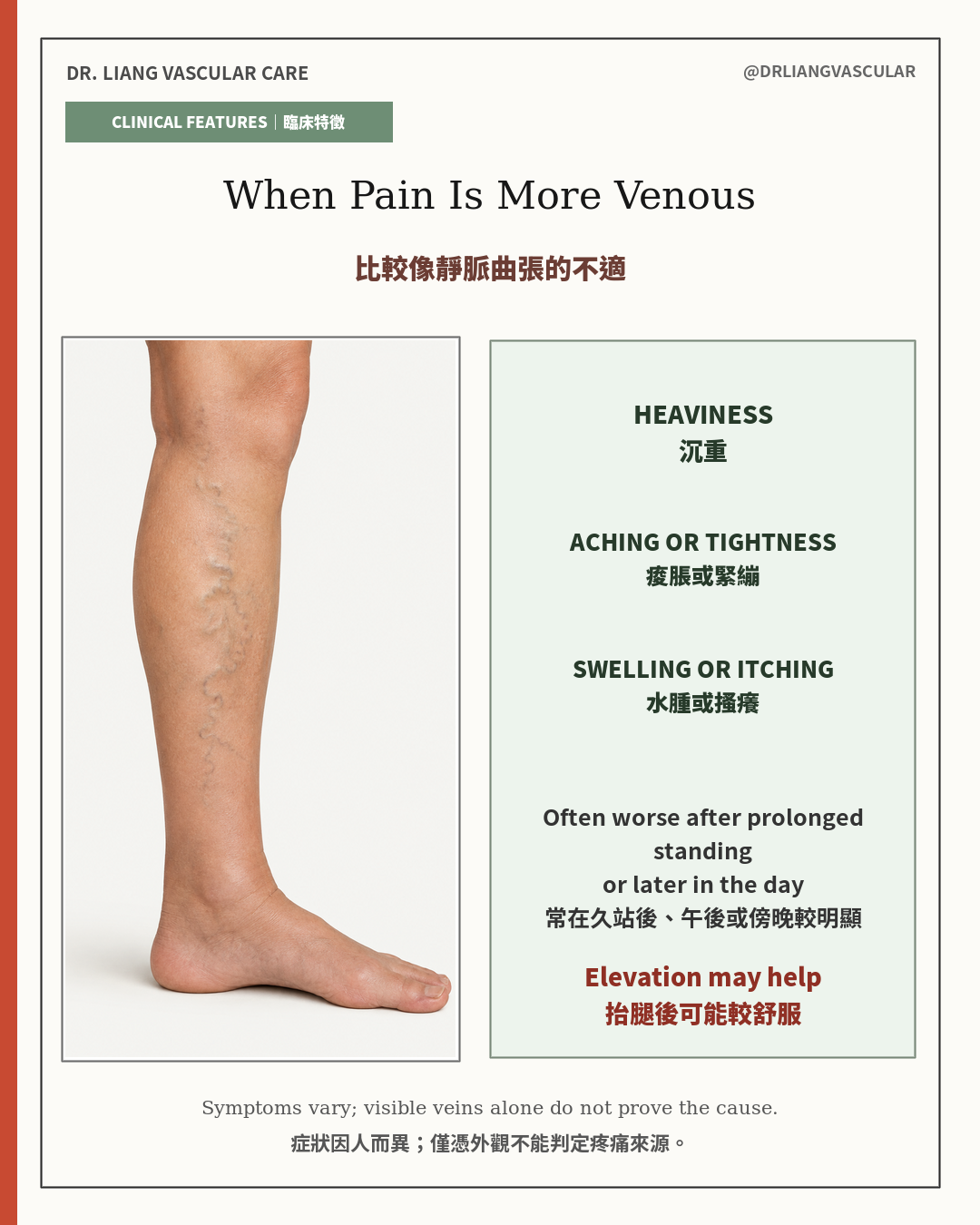
什麼情況比較像靜脈性疼痛?
- 靜脈曲張造成的不適通常比較像沉重、痠脹、緊繃、水腫或搔癢。
- 症狀常在久站後或下午、傍晚較明顯,抬腿休息後可能比較舒服。
- 凸起血管、腳踝水腫或皮膚變化可以是伴隨線索,但只憑血管外觀仍不能證明疼痛來源。
這次門診的轉折:不是每個血管問題都要以治療結束
- 當我把神經性與靜脈性疼痛的差別慢慢說明後,她終於理解:靜脈曲張確實存在,但未必是這次麻痛的主要原因。
- 她決定安排骨科與復健科進一步評估腰椎、椎間盤與神經狀況,而靜脈曲張則依症狀與後續需要追蹤。
- 有時候,最有價值的醫療不是立即進行一項治療,而是協助病人釐清方向、避免把所有症狀都歸因於眼前最明顯的發現。
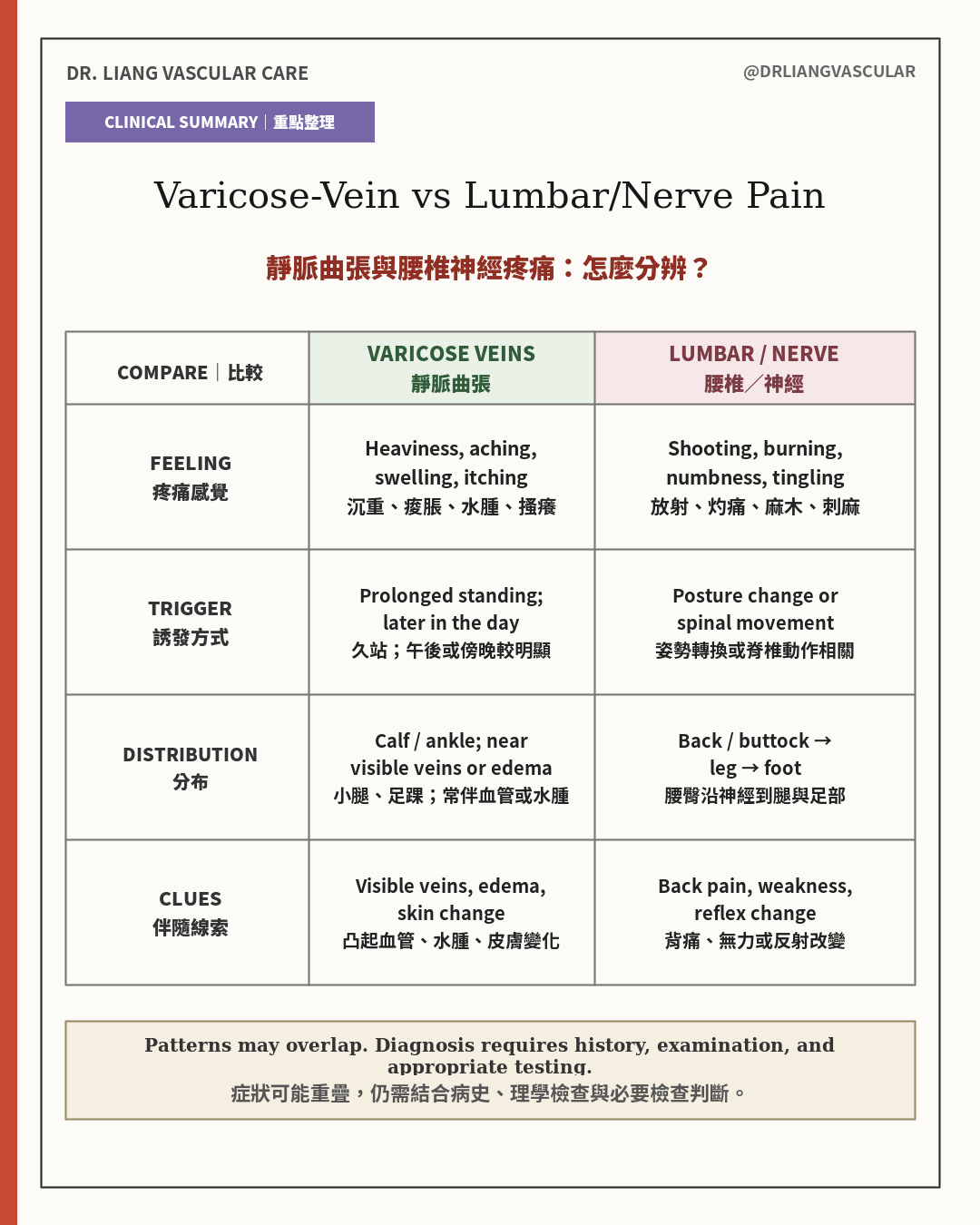
神經性疼痛與靜脈性疼痛的常見差異
| 比較 | 靜脈曲張較常見 | 腰椎/神經較常見 |
|---|---|---|
| 感覺 | 沉重、痠脹、水腫、搔癢 | 放射、灼痛、麻木、刺麻 |
| 誘發方式 | 久站後;下午或傍晚較明顯 | 姿勢轉換或脊椎動作相關 |
| 分布 | 小腿、足踝;常伴血管或水腫 | 腰臀沿神經向腿與足部延伸 |
| 伴隨線索 | 凸起血管、水腫、皮膚變化 | 背痛、無力、感覺或反射改變 |
常見問題
腿上有凸起血管,腿痛就一定是靜脈曲張嗎?
不一定。靜脈曲張可以造成沉重、痠脹、水腫或搔癢,但肌肉、關節、腰椎、周邊神經與其他疾病也可能引起腿痛。需要把疼痛型態、時間、姿勢、分布與檢查結果一起判斷。
X光看到骨刺,就代表疼痛一定來自神經嗎?
也不一定。影像上的退化或骨刺相當常見,不一定與症狀完全相符。是否與神經刺激有關,仍需依病史、理學檢查及必要時的進一步檢查判斷。
什麼是放射痛?
放射痛常被形容為突然、尖銳、灼熱或像電流般的疼痛,可能從腰部或臀部沿著腿向下延伸。這種型態可能提示神經受到刺激,但不能只靠一個描述自行診斷。
提醒:若出現新的或快速惡化的腿部無力、大小便功能改變、會陰麻木,或單側腿突然腫痛並伴隨胸痛、呼吸困難,請立即就醫。
English
An Israeli woman came to the clinic after several weeks of numbness and pain in both calves and the soles of her feet. A lumbar X-ray obtained at an orthopaedic clinic showed bone spurs, and enlarged veins were also noticed behind her calves. The question was whether the symptoms were more likely venous or neurogenic.
- Visible bulging veins do not prove that varicose veins are the cause of pain
- The quality, timing, triggers and distribution of pain often provide more direction than appearance alone
- Neurogenic and venous symptoms may overlap; diagnosis requires history, examination and appropriate testing
Two findings—but which one explained the pain?
- The vascular assessment confirmed mild-to-moderate varicose veins, but their severity and pattern did not fully explain bilateral numbness and pain.
- The more important clue was that the symptoms were closely related to postural transitions and lumbar movement, with numbness extending into the soles.
- This pattern pointed more toward lumbar or nerve irritation than toward the visible veins alone.
When is pain more neurogenic?
- Pain may feel sudden, sharp, burning or electric, and it may be accompanied by numbness, tingling or sensory change.
- It may radiate from the lower back or buttock down the leg toward the foot and may change with sitting, standing up, bending or other spinal movement.
- X-rays mainly show bony structures. MRI or other nerve testing should be selected by the relevant specialist according to the history, examination and warning signs. Imaging findings still need to match the clinical pattern.
When is pain more venous?
- Venous discomfort more often feels like heaviness, aching, tightness, swelling or itching.
- It commonly becomes worse after prolonged standing or later in the day and may improve after leg elevation.
- Bulging veins, ankle oedema or skin change can support the assessment, but appearance alone does not prove the source of pain.
The turning point: not every vascular visit needs to end with a vein procedure
- After the differences were explained, she understood that her varicose veins were real but might not be the main cause of this episode of numbness and pain.
- She chose further assessment with orthopaedics and rehabilitation medicine for the lumbar spine, discs and nerves, while the veins could be followed according to symptoms.
- Sometimes the most meaningful clinical work is to clarify the likely direction and avoid attributing every symptom to the most visible finding.
Common differences between neurogenic and venous pain
| Comparison | More typical of varicose veins | More typical of lumbar or nerve pain |
|---|---|---|
| Feeling | Heaviness, aching, swelling, itching | Shooting, burning, numbness, tingling |
| Trigger | Prolonged standing; later in the day | Postural change or spinal movement |
| Distribution | Calf or ankle; often near veins or oedema | Back or buttock toward the leg and foot |
| Associated clues | Bulging veins, oedema, skin change | Back pain, weakness, sensory or reflex change |
Frequently asked questions
If I have bulging veins and leg pain, are the veins always the cause?
No. Varicose veins may cause heaviness, aching, swelling or itching, but muscles, joints, the lumbar spine, peripheral nerves and other conditions can also cause leg pain. The symptom pattern and examination matter.
Does an X-ray showing bone spurs prove that the pain is neurogenic?
No. Degenerative imaging findings are common and may not explain the symptoms. Their significance depends on the clinical history, examination and any further testing that is appropriate.
What is shooting pain?
Shooting pain is often described as sudden, sharp, burning or electric and may travel from the lower back or buttock down the leg. It can suggest nerve irritation, but the description alone is not a diagnosis.
Note: Seek urgent care for new or rapidly worsening leg weakness, bladder or bowel dysfunction, saddle numbness, or sudden one-sided leg swelling accompanied by chest pain or shortness of breath.
References
- Gloviczki P, Lawrence PF, Wasan SM, et al. The 2023 Society for Vascular Surgery, American Venous Forum, and American Vein and Lymphatic Society clinical practice guidelines for the management of varicose veins of the lower extremities. Part II. J Vasc Surg Venous Lymphat Disord. 2024;12(1):101670. doi:10.1016/j.jvsv.2023.08.011. 查看來源
- Apeldoorn AT, Swart NM, Conijn D, Meerhoff GA, Ostelo RWJG. Management of low back pain and lumbosacral radicular syndrome: the Guideline of the Royal Dutch Society for Physical Therapy (KNGF). Eur J Phys Rehabil Med. 2024;60(2):292–318. doi:10.23736/S1973-9087.24.08352-7. 查看來源
- National Institute for Health and Care Excellence. Low back pain and sciatica in over 16s: Quality statement 2—Referrals for imaging. QS155. Published July 27, 2017. 查看來源
- Montaner-Cuello A, et al. Comparison of Magnetic Resonance Imaging with Electrodiagnosis in the Evaluation of Clinical Suspicion of Lumbosacral Radiculopathy. Diagnostics (Basel). 2024;14(12):1258. doi:10.3390/diagnostics14121258. 查看來源
本篇為匿名化門診故事,部分可辨識細節已調整以保護病人隱私。內容與圖像提供一般衛教,不代表僅憑症狀即可自行診斷。神經性與靜脈性症狀可能重疊,仍需結合個別病史、理學檢查與必要檢查判斷。
Dr LiangVascular
從完整評估開始
先整合症狀、理學檢查與超音波結果,再討論適合的治療選擇。
預約門診