中文版
現在多數適合的主幹靜脈逆流,可以考慮微創治療;傳統手術仍有它的角色,但傷口、疼痛與恢復時間通常較多。
- 先做超音波,再選治療
- 傳統手術傷口與恢復負擔通常較大
- 微創治療多為小針孔、恢復較快
- 雷射與醫療膠仍要依血管條件個別選擇
傳統手術:高位結紮與靜脈剝除
- 透過切口結紮問題靜脈,再將一段病灶血管抽除。
- 通常需要較多切口,麻醉範圍也較大。
- 術後瘀青、疼痛與拉扯感通常較明顯,回到日常活動的時間可能較長。
- 若血管非常彎曲、表淺,或不適合導管治療,傳統手術仍可能是合理選項。
微創治療的優勢
- 多從針孔放入導管,不需要把整段血管抽出。
- 通常使用局部麻醉,傷口較小。
- 術後疼痛與瘀青通常較少,較快恢復走路與日常活動。
- 可依血管條件選擇雷射、醫療膠或其他微創方式。
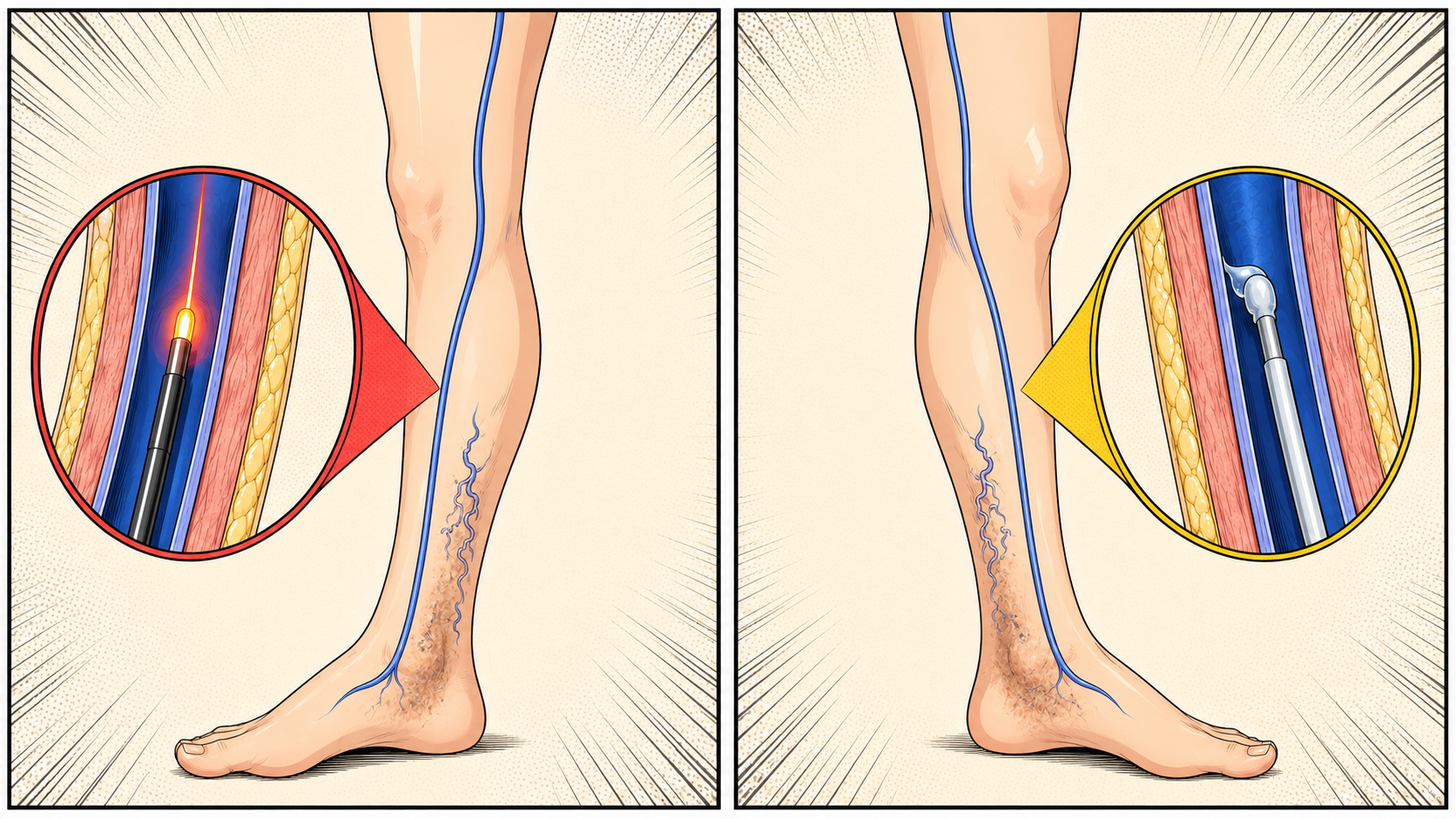
雷射與醫療膠怎麼分?
- 雷射用熱能關閉血管,需要沿血管注射腫脹麻醉;通常休息2–3天,彈性襪穿2–4週。
- 醫療膠不用熱能,也不用沿血管麻醉注射;通常無需特別休息。依個案與治療情況,術後可能不需穿著壓力襪;如需穿著,通常約 0–1 週。
- 有黏合劑過敏史、特殊血管位置或費用考量時,需要另外討論。
分支曲張可能要另外處理
- 雷射與醫療膠主要處理逆流的主幹靜脈。
- 凸起分支可能搭配微創切除,蜘蛛網狀血管可評估硬化治療。
- 可以同時處理,也可以分階段完成。
傳統手術 vs 微創雷射 vs 醫療膠
| 比較項目 | 傳統手術 | 微創雷射 | 醫療膠 |
|---|---|---|---|
| 治療方式 | 結紮並抽除病灶靜脈 | 熱能關閉血管 | 醫療膠黏合關閉血管 |
| 傷口 | 通常較多、較大 | 小針孔 | 小針孔 |
| 麻醉 | 範圍通常較大 | 沿血管腫脹麻醉 | 入口處局部麻醉 |
| 術後感受 | 瘀青、疼痛與拉扯感通常較明顯 | 可能瘀青、緊繃或壓痛 | 可能局部紅腫、疼痛或發炎反應 |
| 恢復 | 通常較慢 | 通常休息2–3天 | 通常無需特別休息 |
| 彈性襪 | 依手術範圍與醫囑 | 一般2–4週 | 依個案與治療情況可能不需;如需穿著,通常約 0–1 週 |
| 適合情況 | 不適合導管或特殊解剖時仍可考慮 | 適合多數可導管治療的主幹逆流 | 希望非熱治療且無相關過敏疑慮者 |
提醒:微創不代表每個人都適合,傳統手術也不是一定不好。我會先把超音波和你的生活需求放在一起,再選負擔最合適、也能處理問題來源的方法。
English
For suitable truncal reflux, minimally invasive treatment is often considered before open surgery. Surgery still has a role when anatomy or other factors make catheter treatment unsuitable.
- Ultrasound first, then treatment selection
- Open surgery usually involves more wounds and a longer recovery
- Minimally invasive treatment uses small access sites and usually allows faster recovery
- Laser and adhesive still require individual selection
Traditional high ligation and stripping
- The problem vein is tied through incisions and a segment is removed.
- It usually involves more incisions and a broader anaesthetic requirement.
- Bruising, pain and pulling are often more noticeable, with a longer return to daily activity.
- It can still be reasonable when anatomy is unsuitable for catheter treatment.
Advantages of minimally invasive treatment
- A catheter is inserted through a small access site without stripping out the whole vein.
- Local anaesthesia and smaller wounds are usually possible.
- Pain and bruising are generally less, with a faster return to walking and daily activity.
- Laser, medical adhesive or other techniques can be selected according to anatomy.
Laser or medical adhesive?
- Laser uses heat and tumescent anaesthesia; usual rest is 2–3 days, with 2–4 weeks of compression.
- Medical adhesive uses no heat or injections along the vein. Depending on the individual case and treatment, compression stockings may not be required after VenaSeal. If recommended, they are usually worn for up to 1 week.
- Allergy history, vein location and cost should also be discussed.
Traditional surgery vs laser vs medical adhesive
| Comparison | Traditional surgery | Laser | Medical adhesive |
|---|---|---|---|
| Method | Tie and remove the vein | Thermal closure | Adhesive closure |
| Wounds | Usually more and larger | Small access site | Small access site |
| Anaesthesia | Usually broader | Tumescent along the vein | Local at access site |
| Recovery | Usually slower | Usually 2–3 lighter days | Usually no special time off |
| Compression | Depends on surgery | Generally 2–4 weeks | May not be required; if recommended, usually up to 1 week |
Note: Minimally invasive treatment is not suitable for everyone, and open surgery is not always inappropriate. The best choice should match ultrasound anatomy and individual needs.
References
- Gloviczki P, et al. SVS/AVF/AVLS Guidelines Part I. J Vasc Surg Venous Lymphat Disord. 2023;11:231–261.e6. 查看來源
- De Maeseneer MG, et al. ESVS 2022 Clinical Practice Guidelines. Eur J Vasc Endovasc Surg. 2022;63:184–267. 查看來源
- Gibson K, et al. WAVES Study: cyanoacrylate closure without post-procedure compression. Vascular. 2017;25(2):149–156. 查看來源
- Medtronic. VenaSeal Closure System: clinical information and post-procedure compression guidance. 查看來源
本文提供一般衛教,不取代個別診斷或治療。若有急性不舒服,請先就近就醫。
Dr LiangVascular
從完整評估開始
先整合症狀、理學檢查與超音波結果,再討論適合的治療選擇。
預約門診