中文版
- 只有廔管那隻手或手臂越來越腫
- 肩膀、上胸或頸部出現凸起的血管
- 下針變困難、洗腎時靜脈壓力升高,或止血時間變久
為什麼會腫?
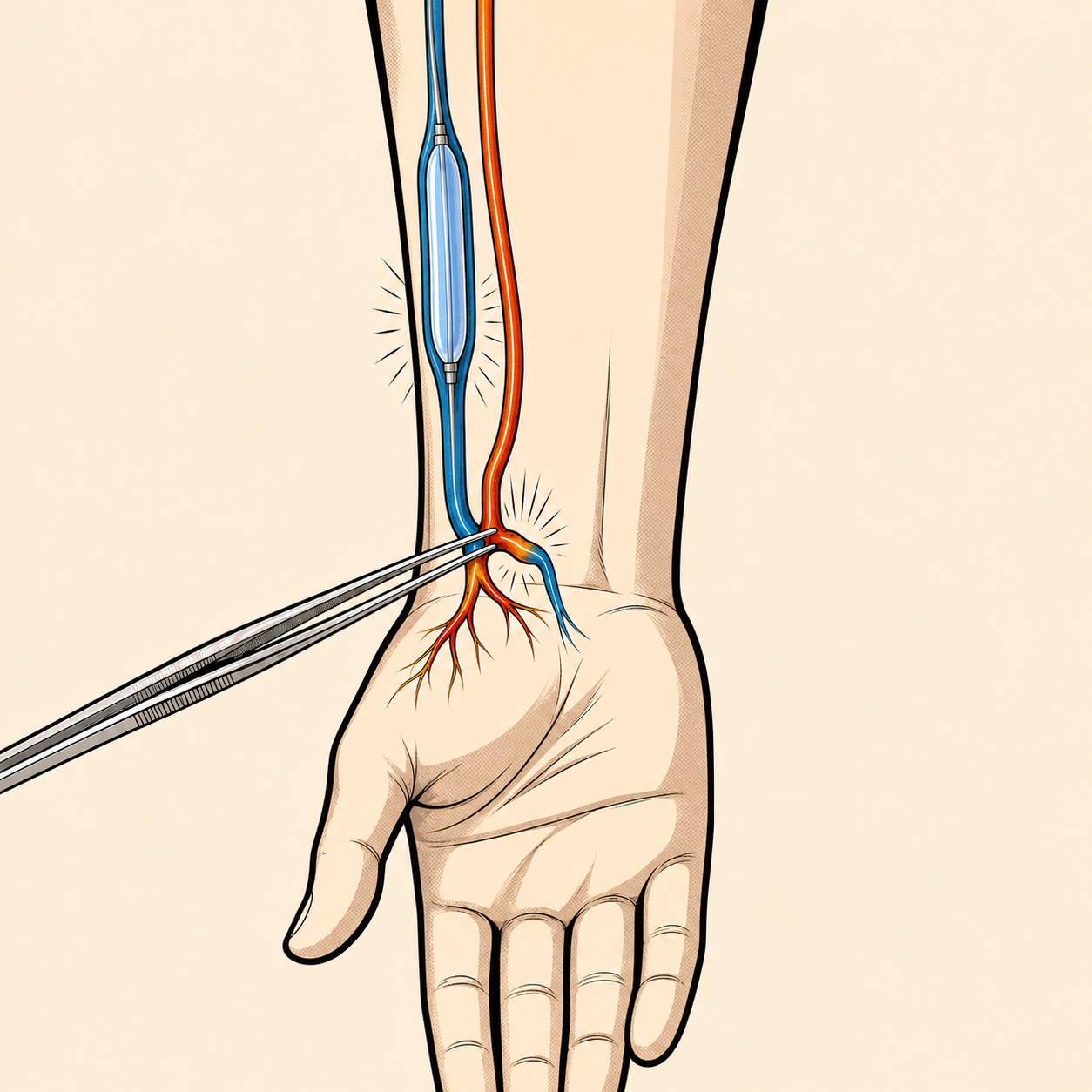
- 廔管會把較多血液送進手臂靜脈,再經由肩膀、胸口深處的血管流回心臟。如果回流路徑變窄,血液就容易塞在手臂,造成靜脈壓力升高與腫脹。
- 過去曾在同側頸部或胸口放過洗腎導管、中央靜脈導管、心律調節器或 PICC 的人,發生中央靜脈狹窄的機會可能較高。不過,沒有這些病史也不代表完全不會發生。
哪些變化要特別注意?
- 只有廔管那隻手或手臂越來越腫。
- 手背、前臂或上臂皮膚明顯緊繃。
- 肩膀、上胸或頸部出現凸起的血管。
- 下針越來越困難,或洗腎時靜脈壓力升高。
- 拔針後止血時間比平常更久。
- 廔管的血管變得鼓脹、很難壓扁。
- 手臂腫脹合併疼痛、發紅或發熱;這也可能與感染或血栓有關,不能只等下一次洗腎再觀察。
是不是看到血管變窄就要擴張?
- 不是。KDOQI 指引把同側手臂水腫列為廔管可能存在重要狹窄的臨床警訊;但只有影像看到狹窄、病人沒有症狀,而且洗腎功能正常時,不建議為了預防而先做血管擴張。
- 我的做法會把腫脹範圍、廔管觸感、下針情況、洗腎壓力與血流一起評估。超音波可以先檢查廔管與手臂血管;如果懷疑胸口深處的中央靜脈有問題,可能還需要進一步影像檢查。
- 確認狹窄已造成手臂腫脹或影響洗腎後,才會依位置與嚴重程度討論血管擴張、支架或其他治療。治療的目的不是單純讓影像看起來更漂亮,而是改善症狀並維持廔管功能。
廔管手臂腫脹時,可以先觀察這些變化
| 觀察到的變化 | 可能代表什麼 | 下一步 |
|---|---|---|
| 只有廔管手臂腫 | 回流血管壓力可能升高 | 告訴透析單位並安排評估 |
| 肩膀或胸前血管變明顯 | 可能形成側枝循環 | 評估中央靜脈回流 |
| 合併洗腎壓力升高或下針困難 | 廔管功能可能受影響 | 安排超音波或進一步影像 |
| 快速腫大、疼痛、紅熱或震顫消失 | 可能有血栓或感染 | 立即就醫 |
提醒:如果手臂突然快速腫大、明顯疼痛、發紅發熱,廔管震顫消失,或合併呼吸困難,請立即就醫。
English
- Increasing swelling limited to the access arm
- New prominent veins over the shoulder, upper chest or neck
- Difficult cannulation, higher venous pressure or longer bleeding after dialysis
Why does the arm swell?
- A dialysis access sends increased blood flow into the arm veins. The blood then returns to the heart through deeper veins in the shoulder and chest. If this outflow pathway becomes narrowed, pressure can build up behind the narrowing and cause arm swelling.
- The risk may be higher in people who previously had a dialysis catheter, central venous catheter, pacemaker lead or PICC on the same side. However, central venous narrowing can also occur without these risk factors.
What changes should you notice?
- Increasing swelling limited to the access arm.
- Tight skin over the hand, forearm or upper arm.
- New prominent veins over the shoulder, upper chest or neck.
- Increasing difficulty with needle insertion.
- Higher venous pressure during dialysis.
- Bleeding that takes longer than usual to stop.
- An access that looks congested or feels difficult to compress.
- Swelling accompanied by pain, redness or warmth. These changes may also indicate infection or thrombosis and should not simply be observed until the next dialysis session.
Does every narrowing need vascular dilation?
- No. The KDOQI guideline identifies swelling of the access-side arm as a clinical indicator of a potentially significant lesion. However, a narrowing found on imaging alone should not automatically be treated when there are no symptoms and the access is functioning normally.
- I would assess the distribution of swelling together with the access examination, cannulation history, dialysis pressures and blood flow. Ultrasound can evaluate the access and arm veins first. Additional imaging may be required when a narrowing in the deeper chest veins is suspected.
- When the narrowing is confirmed to be causing symptoms or affecting dialysis, vascular dilation, a stent or another treatment may be considered according to its location and severity. The goal is not simply to improve the appearance of the image—it is to relieve symptoms and preserve a functional dialysis access.
What to notice when the access arm is swollen
| What you notice | What it may mean | Next step |
|---|---|---|
| Swelling limited to the access arm | Outflow pressure may be rising | Tell the dialysis team and arrange assessment |
| Prominent shoulder or chest veins | Collateral veins may be developing | Assess central venous outflow |
| Higher dialysis pressure or difficult cannulation | Access function may be affected | Arrange ultrasound or additional imaging |
| Rapid swelling, pain, redness, warmth or no thrill | Possible thrombosis or infection | Seek urgent care |
Note: Seek urgent medical care if the arm suddenly becomes severely swollen or painful, develops redness or warmth, the access thrill disappears, or breathing becomes difficult.
References
- Lok CE, Huber TS, Lee T, et al. KDOQI Clinical Practice Guideline for Vascular Access: 2019 Update. American Journal of Kidney Diseases. 2020;75(4 Suppl 2):S1–S164. 查看來源
- Schmidli J, Widmer MK, Basile C, et al. Editor’s Choice—Vascular Access: 2018 Clinical Practice Guidelines of the European Society for Vascular Surgery. European Journal of Vascular and Endovascular Surgery. 2018;55(6):757–818. 查看來源
- Echefu G, et al. Central vein stenosis in hemodialysis vascular access: clinical manifestations and contemporary management strategies. Frontiers in Nephrology. 2023;3:1280666. 查看來源
本文提供一般衛教資訊,不能取代個別診斷與治療。廔管手臂腫脹也可能與感染、血栓、心臟功能或淋巴回流問題有關,應由醫療人員評估。
Dr LiangVascular
從完整評估開始
先整合症狀、理學檢查與超音波結果,再討論適合的治療選擇。
預約門診