LEG SWELLING · TAIPEI
Why is my leg swollen—and when should I worry?
Leg swelling has many possible causes. A vascular assessment helps separate urgent problems from chronic vein disease and other conditions.
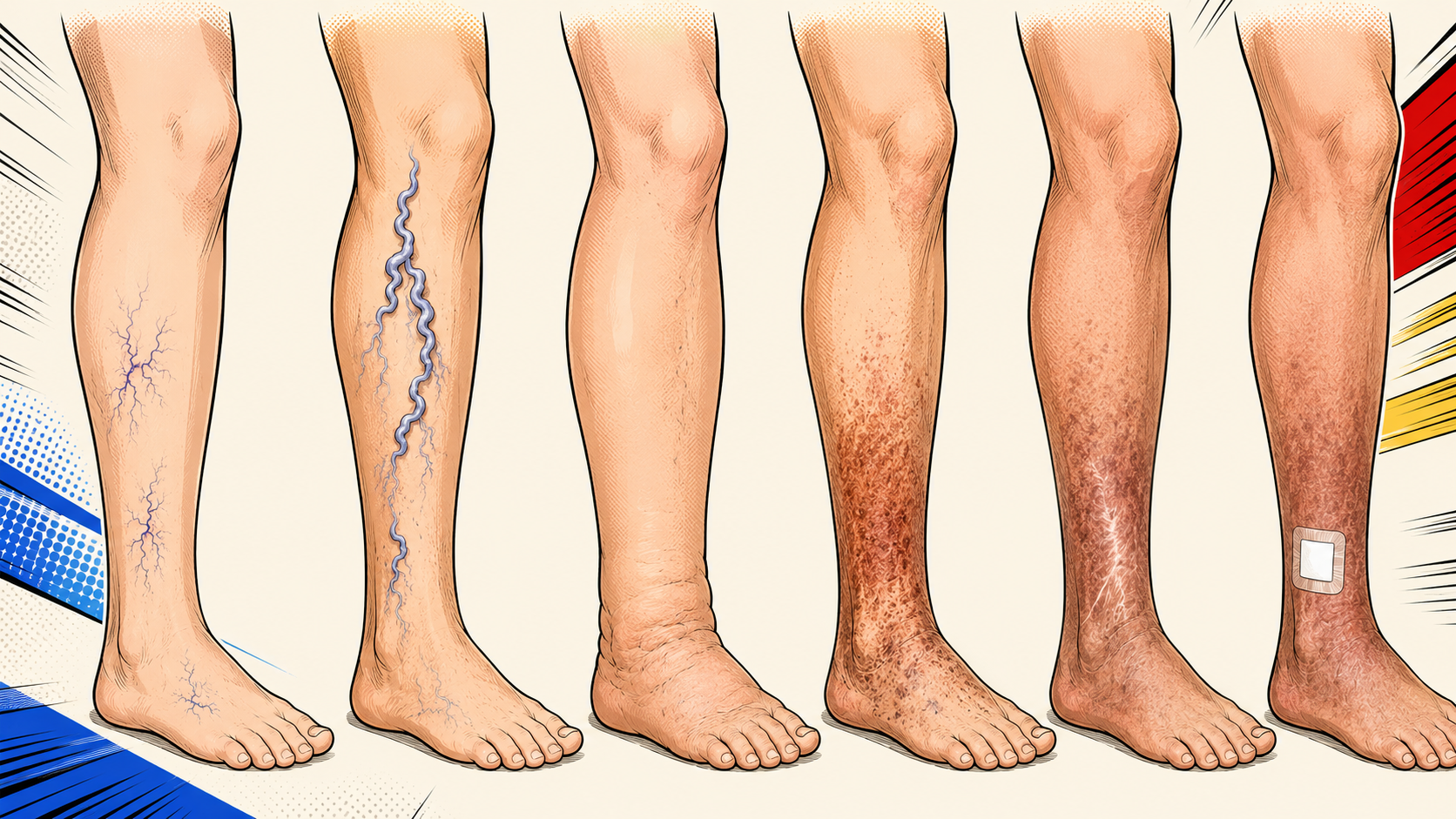
Sudden swelling in one leg—especially with pain, warmth or redness—needs prompt medical assessment to exclude a blood clot. Gradual swelling in both legs may have venous, medication, heart, kidney, lymphatic or other causes and should be assessed according to the whole clinical picture.
Seek urgent care when swelling is sudden
- One leg becomes suddenly larger than the other
- New calf or thigh pain, warmth or redness
- Chest pain, shortness of breath or coughing blood
- The foot becomes cold, pale, blue or severely painful
- Swelling follows a significant injury or is accompanied by fever
Common non-emergency patterns
Swelling that builds up during the day and improves after overnight rest can occur with chronic venous pressure. It may come with heaviness, visible veins, ankle discoloration, itching or wounds.
Swelling in both legs may also relate to medication, reduced mobility, heart or kidney problems, lymphatic disease, or several causes at the same time. The pattern matters.
What a vascular assessment may include
- Comparing both legs and checking the skin, pulses and visible veins
- Reviewing when the swelling started and what makes it better or worse
- Ultrasound when a blood clot, venous obstruction or reflux is suspected
- Referral or additional testing when the pattern suggests a non-vascular cause
What can you do while waiting for a non-urgent appointment?
Keep gently active, avoid sitting still for long periods, and elevate the legs when resting. Do not start strong compression stockings on your own if you have severe pain, a cold foot, known poor arterial circulation or an uncertain diagnosis.
If symptoms change quickly, do not wait for a routine appointment.
Common questions
Does leg swelling always mean varicose veins?
No. Chronic vein disease is one cause, but medication, heart or kidney conditions, lymphatic problems, blood clots and reduced mobility can also cause swelling.
Do I need an ultrasound?
Ultrasound is useful when a blood clot, venous obstruction or reflux is suspected. The appropriate test depends on the timing and pattern of your symptoms.
Can I wear compression stockings immediately?
Compression may help some people, but the correct pressure and length depend on the diagnosis and circulation. Seek assessment first if the swelling is sudden, painful, one-sided or associated with a cold foot.
Can I have the assessment in English?
Yes. Dr LiangVascular provides vascular consultations in English and Chinese in Taipei and New Taipei City.
This page provides general health education and does not replace an individual medical assessment. Sudden one-sided leg swelling, chest pain, shortness of breath, a cold painful limb, or uncontrolled bleeding requires urgent medical care.